

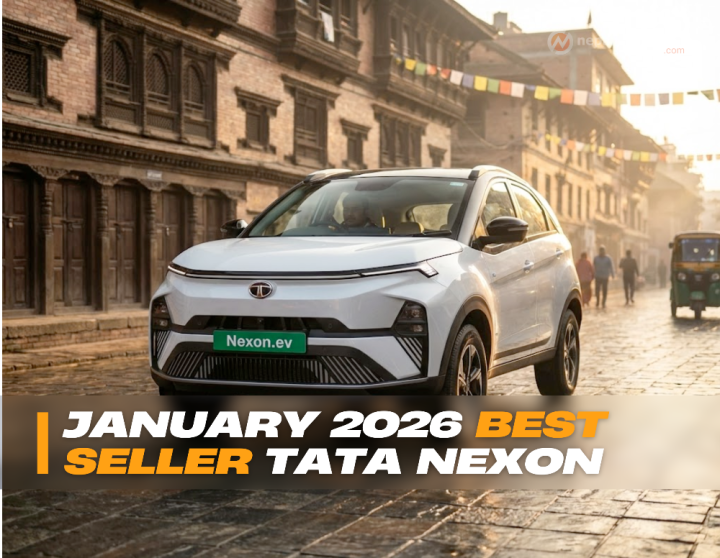
January 2026 was a watershed month for Tata Motors in Nepal. The brand moved 70,222 units, eclipsing the 48,075 units it sold in the same month a year earlier. That 46.07% lift translates to 22,147 additional vehicles on the road. The surge is not evenly spread; a handful of models carried the bulk of the growth.
| Metric | January 2026 | January 2025 |
|---|---|---|
| Total Tata sales | 70,222 units | 48,075 units |
| Growth % | 46.07% | - |
The headline‑grabbing figure belongs to Tata Nexon, which logged 23,365 units – a 51.75% increase over its January 2025 tally. The model’s dual‑powertrain strategy (ICE and EV) appears to be resonating with buyers who crave flexibility in a market still wrestling with charging infrastructure.
The Nexon’s performance is remarkable for two reasons. First, it is the only Tata model offered in both ICE and EV forms that managed to break the half‑million‑unit threshold in a single month across Nepal. Second, its growth outpaced the brand’s overall rise, indicating that the model is pulling the market forward rather than merely riding the tide.
Industry insiders say the Nexon’s compact‑SUV silhouette, combined with a respectable electric range of 300 km, hits the sweet spot for urban families. That matters because Nepal’s city dwellers are increasingly sensitive to fuel costs and emission penalties.
Hot on Nexon’s heels is the Tata Punch, with 19,257 units sold. The sub‑compact SUV’s all‑metal body and high ground clearance make it a favorite for the country’s rugged road conditions. While its growth rate was lower than the Nexon’s, Punch still contributed a solid 40% of the brand’s total volume.
The Punch’s resilience underscores Tata’s strategy of offering a mix of pure‑ICE and hybrid‑ready models. It also hints at a gap in the lineup – an EV version of Punch could capture even more market share if introduced before the next fiscal year.
Tata’s nine‑model portfolio includes three ICE‑only vehicles and six that exist in both ICE and EV forms. However, two of those nine – Sierra and Harrier – are not currently sold in Nepal. The remaining seven models continue to see healthy demand.
| Model | Availability in Nepal | January 2026 Units |
|---|---|---|
| Tata Tiago | Available | 8,349 units |
| Tata Tigor | Available | 1,316 units |
| Tata Altroz | Available | 3,135 units |
| Tata Safari | Available | 2,375 units |
| Tata Kaveri | Available | 1,666 units |
| Tata Sierra | Not available | - |
| Tata Harrier | Not available | - |
The absence of Sierra and Harrier is a strategic blind spot. Both are positioned as premium crossovers, and their entry could diversify Tata’s portfolio further up‑market. For now, the brand leans on the success of its more affordable, versatile offerings.
Tata’s January numbers do more than confirm a sales spike; they map a clear trajectory for the brand in Nepal. The data suggests three actionable takeaways:
Tata’s next moves will likely involve expanding charging infrastructure partnerships and rolling out new EV variants before the end of the fiscal year. That matters because the brand’s ability to sustain a 46.07% growth rate hinges on keeping the momentum alive across all model tiers.
The broader market will watch closely. If Tata can translate this January surge into a sustained upward trend, it could reshape Nepal’s passenger‑car landscape for the remainder of 2026 and beyond.
Q: How many units did the Tata Nexon sell in January 2026? A: The Nexon moved 23,365 units, a 51.75% increase over the same month in 2025.
Q: Are the Tata Sierra and Harrier sold in Nepal? A: No, both models are currently unavailable in the Nepali market.
Q: What is the total number of Tata passenger cars sold in Nepal for January 2026? A: 70,222 units were sold, up 46.07% from January 2025.
Q: Which Tata model ranked second in sales after the Nexon? A: The Tata Punch came second with 19,257 units sold.
Q: When can we expect an EV version of the Tata Punch? A: Tata has not announced a launch date yet, but industry analysts anticipate a rollout before the end of 2026.

Nepal Auto-Trader is one-stop platform for all automotive needs. We provide unbiased and unparalleled news/reviews of all auto-motives being launched in Nepalese Auto-Industry. Find recent updates and price of bikes/cars, compare and review recently launched bikes/cars, buy/sell/trade reconditioned cars/bikes and all government news about changing rules and regulation, road safety by subscribing us.

Subscribe to our Newsletter
© Copyright 2026, Nepal Autotrader



.png)
.png)