

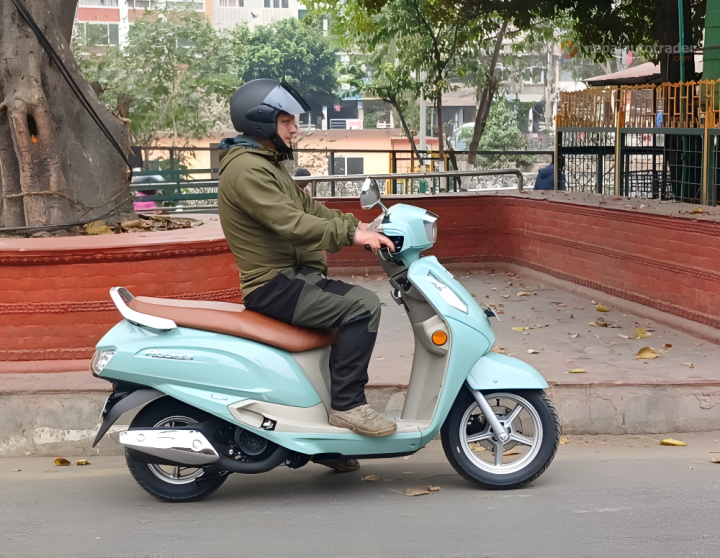
A handful of Suzuki Access 125 units were spotted parked outside a busy intersection in Kathmandu last week. Local riders reported that the scooters bear the latest Indian spec sheet – the version that debuted in India in March 2024. The sighting aligns with whispers from dealers that import paperwork is already in process. If the rumor mill is correct, the first batch will hit showrooms by Q4 2024, giving Nepal its first official stock of the model that has sold over 5 million units worldwide.
Why does this matter? Nepal’s 125 cc segment is dominated by legacy players. A fresh influx of a proven, fuel‑efficient model could redraw the sales map, especially as riders seek alternatives to the aging Honda Activa line.
Suzuki’s dominance in the Indian market isn’t accidental. The Access 125 combines three core strengths:
| Specification | Detail |
|---|---|
| Engine | 124 cc, air‑cooled, single‑cylinder |
| Power | 8.3 bhp @ 6,500 rpm |
| Torque | 10.2 Nm @ 5,000 rpm |
| Fuel efficiency | ≈ 55 km/l (manufacturer claim) |
| Display | 4.2‑inch TFT, high‑contrast, fast refresh |
| Connectivity | Ride Connect (Bluetooth), OBD‑II ready |
| Brakes | Front 130 mm drum, rear 130 mm drum |
| Weight | 112 kg (kerb weight) |
The Access 125 enters a segment where Honda Activa 125, Bajaj Pulsar NS125 and TVS Ntorq 125 vie for dominance. A quick comparison highlights the Access’s edge in mileage and under‑seat storage, while the Activa still leads on dealer network breadth.
| Feature | Suzuki Access 125 | Honda Activa 125 |
|---|---|---|
| Engine displacement | 124 cc | 124 cc |
| Claimed mileage | 55 km/l | 50 km/l |
| Under‑seat storage | 12 L | 10 L |
| TFT display | Yes, 4.2‑inch | No |
| Ride Connect | Yes | No |
If pricing lands in the NRs 70,000‑80,000 bracket, the Access could undercut the Activa’s entry‑level price while offering more tech. That matters for price‑sensitive commuters who also crave a modern cockpit.
Dealers have yet to issue an official press release, but the timeline appears clear:
Riders should watch for Ride Connect app roll‑outs; the feature lets owners log trip data, locate service centers and receive OTA updates. It signals Suzuki’s push toward a connected two‑wheel ecosystem in Nepal.
The arrival also raises questions about after‑sales support. Suzuki already operates a service network in Kathmandu, but expanding parts inventory to cover the newer OBD‑II tools will be essential.
Analysts at Auto Nepal Insights note that the Access 125’s entry could lift overall 125 cc segment growth by 3‑4 % in 2025. The model’s reputation for low running cost aligns with Nepal’s rising fuel prices, making it a logical choice for both new riders and fleet operators.
For a deeper dive into the Indian two‑wheeler market, see our Indian two‑wheeler market analysis which outlines why Suzuki has held the top spot for a decade.
If you’re curious about how Ride Connect works, our Ride Connect technology explainer breaks down the Bluetooth pairing process and the data it captures.
Q: When will the Suzuki Access 125 officially launch in Nepal?
A: Dealers expect an official launch in October 2024, with pre‑order registration opening in July.
Q: What is the expected price range for the Access 125 in Nepal?
A: While Suzuki has not announced a figure, market speculation places it between NRs 70,000 and NRs 80,000 for the base variant.
Q: How does the Access 125 compare to the Honda Activa 125 on fuel economy?
A: Suzuki claims about 55 km/l, whereas Honda lists roughly 50 km/l, giving the Access a modest edge.
Q: Will the Ride Connect feature work with any smartphone?
A: Yes, the Bluetooth module pairs with Android 5.0+ and iOS 11+ devices, offering trip logs and service alerts.
Q: Are there any changes to the chassis or styling for the Nepal version?
A: No. The Nepal‑bound units retain the same lightweight frame, seat ergonomics and under‑seat storage as the Indian launch.
Q: What after‑sales support will be available for the Access 125?
A: Suzuki’s existing Kathmandu service centers will stock genuine parts, and OBD‑II diagnostic tools are being added to meet the new emission standards.

Nepal Auto-Trader is one-stop platform for all automotive needs. We provide unbiased and unparalleled news/reviews of all auto-motives being launched in Nepalese Auto-Industry. Find recent updates and price of bikes/cars, compare and review recently launched bikes/cars, buy/sell/trade reconditioned cars/bikes and all government news about changing rules and regulation, road safety by subscribing us.

Subscribe to our Newsletter
© Copyright 2026, Nepal Autotrader



.png)
.png)