

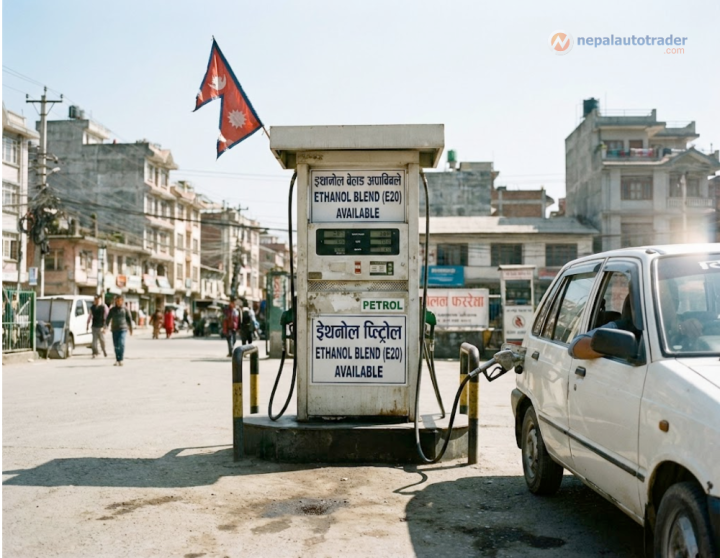
Kathmandu – The cabinet, chaired by Anil Kumar Sinha, Industry, Commerce and Supplies Minister, announced that the long‑awaited ethanol‑petrol blending policy will move from paper to practice. The minister referenced the Ethanol Mixing Order‑2082, already cleared by the council of ministers in the last Poush, and said it will be gazetted shortly. That matters because the legal seal triggers the procurement, pricing and quality‑monitoring mechanisms.
Blending 10 percent ethanol into regular petrol is not a cosmetic tweak. It lowers the calorific value slightly, but the higher octane rating can improve engine efficiency. The Ministry assures that the blend will meet a 99.5 percent purity threshold, with continuous lab checks at designated stations. Drivers can expect the same pump feel – the difference shows up in reduced carbon output, not in a sudden loss of mileage.
Key benefits:
Potential drawbacks:
The minister framed the move as a clean‑energy milestone. By sourcing ethanol domestically, Nepal can keep more money within its borders. The projected foreign‑exchange saving could be redirected to local development projects, a point the minister highlighted during the press briefing.
A senior official from Narayani Sugar Mill explained that molasses, a by‑product of sugar processing, will be the primary feedstock. The sugar industry, corn husk, wheat straw and sisal taro are also earmarked, ensuring a diversified supply base.
| Raw Material | Annual Potential (litres) | Key Supplier |
|---|---|---|
| Molasses | 1.2 million | Narayani Sugar Mill |
| Corn Husk | 0.8 million | Mid‑Hill Agro‑Cooperative |
| Wheat Straw | 0.5 million | Terai Grain Board |
| Sisal Taro | 0.3 million | Western Agro‑Initiative |
Consumer‑rights activist Madhav Timalsina welcomed the job‑creation angle but warned that fuel quality must never be compromised. He asked for a transparent audit trail that proves each litre meets the 99.5 percent purity standard.
Private‑sector leaders, such as Ved Prasad Kharel of Kiyan Chemical Industries, expressed willingness to invest 12 billion rupees in new distillation capacity. Yet they lament the bureaucratic maze: “seven committees, endless file‑circulation – that drags projects for years,” he said.
The Sugar Industry Association chief, Shashikant Aggarwal, noted that the implementation order arrived two decades after the first feasibility study. Without a clear pricing formula and payment schedule, investors remain hesitant.
The Ministry will convene a pricing committee chaired by its secretary within the next fortnight. The committee’s recommendation will go to the cabinet for final approval. Meanwhile, Narayani Oil Corporation will draft a separate procurement regulation to govern how ethanol is purchased and blended at refineries.
| Phase | Target Date | Status |
|---|---|---|
| Gazette Order | Mid‑February 2026 | Pending |
| Pricing Committee Formation | End‑February 2026 | In progress |
| First Blend Test | April 2026 | Planned |
| Nationwide Rollout | July 2026 | Projected |
If the timeline holds, drivers could see the blended fuel at pumps by the second half of the year. The success will hinge on price parity, steady feedstock flow, and robust quality oversight. That changes things for Nepal’s energy security and for the farmers eyeing a new revenue stream.
Q: What percentage of ethanol will be blended with petrol? A: The government has approved a 10 percent ethanol blend for regular petrol across Nepal.
Q: When will the blended fuel be available at pumps? A: The rollout is slated for July 2026, after a test phase in April.
Q: How much petrol import will be reduced? A: Officials estimate a cut of 13 crore litres of petrol imports per year.
Q: Which raw materials will feed ethanol production? A: Molasses, corn husk, wheat straw and sisal taro are the primary feedstocks, as outlined in the supply table.
Q: Will fuel quality be affected? A: The blend must meet a 99.5 percent purity standard, with continuous laboratory monitoring to ensure engine compatibility.
Q: How will the price of the blended fuel be set? A: A pricing committee under the Ministry of Industry, Commerce and Supplies will recommend a rate, which the cabinet will then approve.

Nepal Auto-Trader is one-stop platform for all automotive needs. We provide unbiased and unparalleled news/reviews of all auto-motives being launched in Nepalese Auto-Industry. Find recent updates and price of bikes/cars, compare and review recently launched bikes/cars, buy/sell/trade reconditioned cars/bikes and all government news about changing rules and regulation, road safety by subscribing us.

Subscribe to our Newsletter
© Copyright 2026, Nepal Autotrader



.png)
.png)