

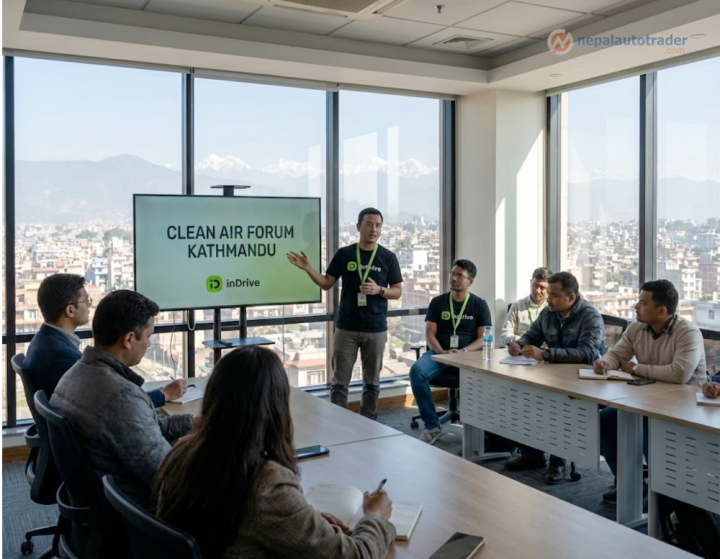
Kathmandu’s sky has turned a permanent hazy gray. Satellite data shows particulate matter (PM2.5) hovering above the WHO safe limit for 280 days a year. That matters because health costs climb, tourism stalls and daily commutes become a gamble. The Kathmandu Clean Air Dialogue was designed as a single platform where the fragmented voices of government, research institutes, civil society and industry could finally converge.
The forum’s charter is simple: treat air quality as a shared responsibility, back it with data‑driven policies, and translate talk into Practical, Phased out actions. The presence of the minister signalled political will, while private sector leaders signalled market readiness. The mix of perspectives is the article’s strongest asset.
A diverse roster assembled under InDrive’s banner. Below is a snapshot of the principal participants and the role each pledged to play.
| Stakeholder | Sector | Committed Role |
|---|---|---|
| Government ministries | Public | Policy alignment, funding streams |
| Research institutions | Academia | Air‑quality monitoring, impact studies |
| NGO representatives | Civil society | Community outreach, advocacy |
| Private‑sector firms | Industry | Electrification of fleets, tech deployment |
The minister’s opening remarks highlighted recent strides: tighter emission standards for two‑wheelers, pilot electric‑bus routes in the city centre, and a new tax rebate for EV purchases. Yet he warned that without Policy Coordination, the piecemeal efforts will never add up.
These points are not abstract promises. They are anchored to a timeline that the forum drafted on the spot.
| Phase | Target Date | Status |
|---|---|---|
| Sensor network rollout | June 2026 | Planning |
| EV rebate law amendment | August 2026 | Draft under review |
| Electric bus procurement | December 2026 | Funding secured |
| Commercial‑fleet pilot | Q4 2026 | Partner selection ongoing |
The dialogue did not shy away from the toughest sources: construction dust, household bio‑fuel burning, and the ever‑growing traffic volume. A multi‑pronged strategy emerged:
The consensus was clear: Shared Responsibility is the only way to break the cycle of reactive measures.
InDrive pledged to publish a post‑dialogue white paper within 30 days, outlining actionable items, responsible agencies and funding gaps. The minister promised to table the draft at the next cabinet meeting, slated for early July.
If the roadmap survives political turnover and budget constraints, Kathmandu could see a measurable dip in PM2.5 levels by the end of 2027. That would translate into fewer respiratory illnesses, a boost to tourism revenues, and a more livable city for the next generation.
The real test will be execution. The dialogue has set the stage; now the actors must deliver.
Q: When will the Kathmandu Clean Air Dialogue ecommendations be implemented? A: The draft roadmap targets key milestones throughout 2026, with the first sensor network and EV rebate amendment expected by August 2026.
Q: Which vehicle categories receive the proposed electric‑vehicle rebates? A: Cars priced below NPR 2 million qualify for a 30 % import‑duty cut, while electric two‑wheelers receive a 20 % cut.
Q: How will the city monitor progress on air‑quality improvements? A: A real‑time public dashboard, managed by the National Centre for Atmospheric Research, will display PM2.5, NOx and CO levels across the valley.
Q: Are private logistics firms obligated to switch to electric vans? A: Participation is voluntary for the pilot, but firms that join will receive tax incentives and priority access to charging infrastructure.
Q: What role does InDrive play after the dialogue? A: InDrive will act as convenor, coordinating stakeholder follow‑ups, publishing the white paper and facilitating data sharing among partners.
Q: Will the clean‑air measures affect vehicle registration fees? A: The proposed EV rebates are separate from registration fees; however, the government may introduce lower registration rates for certified low‑emission vehicles in future budget cycles.

Nepal Auto-Trader is one-stop platform for all automotive needs. We provide unbiased and unparalleled news/reviews of all auto-motives being launched in Nepalese Auto-Industry. Find recent updates and price of bikes/cars, compare and review recently launched bikes/cars, buy/sell/trade reconditioned cars/bikes and all government news about changing rules and regulation, road safety by subscribing us.

Subscribe to our Newsletter
© Copyright 2026, Nepal Autotrader



.png)
.png)