

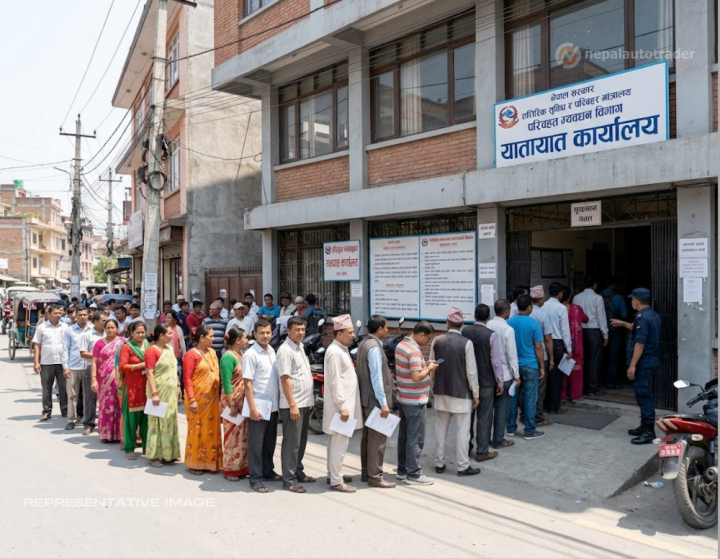
Nepal’s transport offices have long been a pressure point. Long queues, slow paperwork, inconsistent service. Everyone knows the story. Now, the government is stepping in with a clear 11-point instruction framework aimed at fixing what has become a deeply frustrating system.
This is not cosmetic. It is structural.
The directive, issued to improve the functioning of transport offices, targets service delivery inefficiencies and introduces operational clarity across departments. It comes at a time when vehicle ownership is rising, compliance requirements are tightening, and citizens expect faster, cleaner processes.
That matters.
At its core, the instruction set focuses on three areas, efficiency, transparency, and digitization. The government is not just asking offices to work better, it is asking them to work differently.
These are not new ideas. But this time, they come bundled with instruction, not suggestion.
This changes things.
The strongest signal in the directive is clear, digitization is no longer optional. The government is pushing transport offices to move services online, reducing physical dependency and human bottlenecks.
| Reform Area | Current Situation | Expected Change |
|---|---|---|
| Service Access | Manual, office-based | Online-enabled processes |
| Processing Time | Delayed, inconsistent | Streamlined workflows |
| Transparency | Limited tracking | Digital monitoring systems |
Online services are expected to reduce queues and improve access, especially for users outside major urban centers. It also aligns with broader efforts already seen in the transport sector, including digital registration and licensing frameworks.
The direction is clear. Less paper. More systems.
This is where the directive gets sharper. The government is not just improving systems, it is tightening responsibility.
Transport offices are being instructed to ensure staff accountability, timely service delivery, and strict adherence to procedures. Monitoring mechanisms are expected to track performance and identify inefficiencies.
For a sector often criticized for inconsistency, this is a shift in tone. A necessary one.
And long overdue.
For the average vehicle owner, this is not policy. It is experience.
Faster registration. Smoother renewals. Less time wasted standing in line. The directive aims to directly impact these everyday interactions.
| Service | Current Challenge | Expected Improvement |
|---|---|---|
| Vehicle Registration | Long wait times | Faster processing |
| License Services | Manual dependency | Online integration |
| Payments | Physical transactions | Digital payment options |
This aligns with earlier efforts to modernize transport systems, including discussions around online services and smart card licenses. The difference now is execution pressure.
Citizens will notice quickly if this works. Or if it does not.
The directive is a starting point, not a finish line. Implementation will define success.
Transport offices across Nepal are expected to adopt these instructions and begin aligning their operations accordingly. The Department of Transport Management will likely play a central role in ensuring compliance and monitoring progress.
There is also a broader context. Nepal’s mobility landscape is evolving fast, from rising EV adoption to increased vehicle imports and ownership growth. Systems that once worked under lower demand are now under strain.
This directive is a response to that pressure.
The real test begins now.
Because reforms look good on paper. Execution decides everything.
Q: What is the 11-point instruction for transport offices?
A: It is a government directive outlining 11 key measures to improve service delivery, efficiency, and transparency in transport offices across Nepal.
Q: Will transport services become fully online?
A: The directive strongly emphasizes digital services, with online systems expected to expand significantly, though full digitization may take time.
Q: How will this affect vehicle registration?
A: Vehicle registration processes are expected to become faster and more streamlined, reducing delays and manual paperwork.
Q: Who is responsible for implementing these changes?
A: Transport offices will implement the changes, with oversight likely from the Department of Transport Management.
Q: When will these improvements be visible?
A: The directive does not specify an exact timeline, but changes are expected to roll out progressively as offices adopt the new system.

Nepal Auto-Trader is one-stop platform for all automotive needs. We provide unbiased and unparalleled news/reviews of all auto-motives being launched in Nepalese Auto-Industry. Find recent updates and price of bikes/cars, compare and review recently launched bikes/cars, buy/sell/trade reconditioned cars/bikes and all government news about changing rules and regulation, road safety by subscribing us.

Subscribe to our Newsletter
© Copyright 2026, Nepal Autotrader



.png)
.png)