

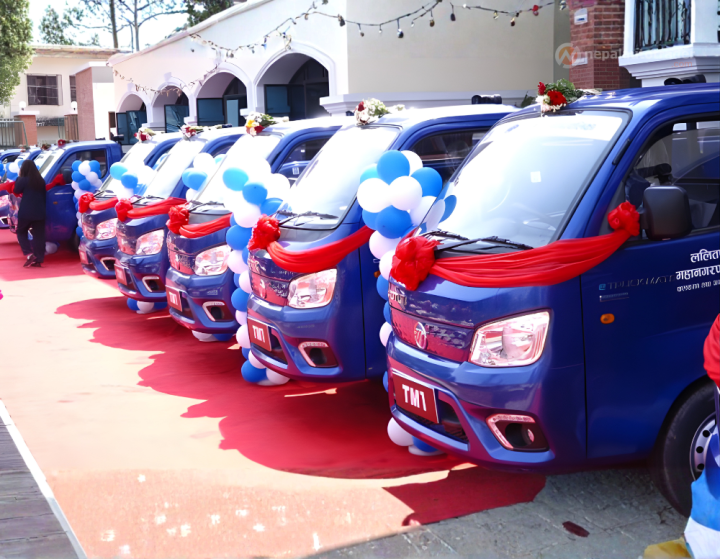
The transition is no longer theoretical. Lalitpur Mahanagar has officially brought 11 units of Foton electric vehicles into its fleet, dedicated to one of the most demanding urban tasks, waste collection. It is a quiet move on paper. On the streets, it changes the rhythm entirely.
These vehicles are not about speed or style. They are about consistency. Daily routes, heavy loads, stop and go traffic. That matters.
The decision signals a clear pivot. Municipal operations, long dependent on diesel-powered fleets, are beginning to align with Nepal’s broader electrification push. This is not just about vehicles, it is about infrastructure thinking catching up with policy intent.
The choice of Foton EVs reflects a growing trust in electric commercial platforms that can handle real-world workloads. Waste collection is unforgiving. Tight alleys, constant halts, variable payloads. It exposes weaknesses quickly.
So the selection itself says something.
Electric makes sense here. More than highway logistics. More than intercity transport. This is where EVs quietly win.
And timing matters. With cities facing increasing pressure to manage pollution and waste simultaneously, the convergence of both through electrification is strategic, not cosmetic.
The newly acquired 11 electric vehicles are assigned specifically for waste collection duties across Lalitpur. The intent is focused, not experimental.
There is no ambiguity in use case:
It is a targeted deployment. No pilot program language. No soft launch framing. These vehicles are expected to work, immediately.
This changes things.
The commercial EV segment in Nepal is still evolving, but moves like this accelerate acceptance. Passenger EVs have already established momentum, but utility vehicles, especially in public service, bring a different kind of validation.
When a municipal body invests, it signals durability confidence.
Compare this to the private sector adoption curve. Fleet operators look for:
Public adoption answers those questions faster than marketing ever could.
While the vehicles are now under Lalitpur Mahanagar ownership, the ecosystem behind them matters just as much. From importer networks to after sales support, commercial EV viability depends on more than just hardware.
Foton, as a global commercial vehicle manufacturer, has been expanding its electric portfolio steadily. In Nepal, its presence in the commercial segment has been visible through fleet level engagements rather than retail visibility.
This is where the real test begins.
Deployment is one phase. Sustained uptime is another. Municipal fleets do not tolerate downtime gracefully. They expose service gaps quickly.
The immediate benefits are visible, even if subtle.
| Impact Area | Expected Change | Urban Relevance |
|---|---|---|
| Air Quality | Reduction in emissions | Cleaner public spaces |
| Noise Pollution | Lower operational noise | Improved living conditions |
| Operational Cost | Reduced fuel dependency | Budget efficiency |
Waste collection often happens early morning or late evening. Noise matters more than people think. Electric vehicles soften that impact significantly.
It is not dramatic. It is consistent. And consistency is what cities need.
This is not an isolated move. It is a marker.
If the Foton EV fleet performs as expected, the path becomes clearer for:
It also sets a precedent. Other cities will watch closely. Results will travel faster than announcements.
The shift is not loud. But it is steady. And that is how cities change.
Q: How many electric vehicles did Lalitpur Mahanagar purchase?
A: Lalitpur Mahanagar has purchased 11 Foton electric vehicles specifically for waste collection operations within the city.
Q: What is the purpose of these Foton EVs?
A: The vehicles are dedicated to urban waste management, handling daily garbage collection routes across Lalitpur.
Q: Why are electric vehicles being used for waste collection?
A: EVs offer zero emissions, lower operating costs, and quieter operation, making them ideal for dense urban environments and frequent stop start usage.
Q: Are these vehicles part of a pilot project?
A: The deployment appears to be a direct operational integration rather than a limited pilot, indicating confidence in electric commercial vehicles.
Q: What brand are the electric vehicles?
A: The vehicles are from Foton, a global commercial vehicle manufacturer expanding its electric lineup.
Q: What impact will this have on the city?
A: The shift is expected to improve air quality, reduce noise pollution, and lower fuel costs, contributing to cleaner and more efficient urban management.

Nepal Auto-Trader is one-stop platform for all automotive needs. We provide unbiased and unparalleled news/reviews of all auto-motives being launched in Nepalese Auto-Industry. Find recent updates and price of bikes/cars, compare and review recently launched bikes/cars, buy/sell/trade reconditioned cars/bikes and all government news about changing rules and regulation, road safety by subscribing us.

Subscribe to our Newsletter
© Copyright 2026, Nepal Autotrader



.png)
.png)