

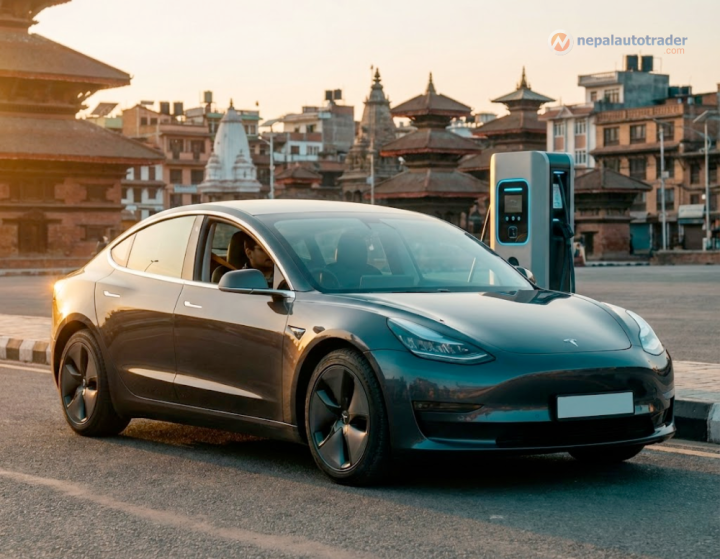
If you only travel 10‑20 km a day, the math flips. An EV’s initial cost can be up to NRs 4 million for a mid‑range model, while a comparable petrol hatchback starts around NRs 2.3 million. The break‑even point assumes you’ll log at least 30 km each day, charging at home overnight. That matters.
A typical home charger (7 kW) costs about NRs 75,000 plus installation. In a rented flat, you need the landlord’s permission and a separate meter, adding bureaucracy and extra fees. Those hidden expenses erode the advertised savings.
| Scenario | Typical Monthly Cost | Notes |
|---|---|---|
| Home‑charging owner | NRs 2,500 (electricity) | Assumes 150 kWh/month, night‑rate |
| Public‑charger user | NRs 5,800 (per kWh) | Rates vary, often 2‑3× home price |
| Petrol driver | NRs 9,200 (fuel) | Based on 800 km/month, 100 km/L |
Manufacturers guarantee battery life for 8‑10 years or 150,000 km, whichever comes first. In Nepal’s monsoon‑laden climate, temperature swings can accelerate degradation. Replacing a 60 kWh pack can cost NRs 1.2 million, a chunk of the vehicle’s residual value.
A recent study showed EV resale values in South Asia dropping 15‑20 % faster than petrol equivalents after five years. That’s because buyers fear costly battery swaps. This changes things for anyone who plans to sell within a few years.
The government’s incentives, reduced import duty and tax holidays—are attractive, yet the charging network is uneven. Kathmandu hosts about 120 public points, but districts like Dolakha and Bajhang have fewer than five combined. For a driver who regularly visits family in the hills, that translates to a forced stop and a waiting game.
EVs are undeniably environmentally friendly, and their maintenance cost is lower. But the equation isn’t purely financial. Lifestyle, housing type, and travel patterns weigh heavily. For a city‑dwelling professional with a private garage, the switch makes sense. For a rural farmer shuttling between fields and markets, a reliable petrol or hybrid remains the pragmatic choice.
The market will evolve, more chargers, better batteries, and clearer government incentives. Until then, buyers should run the numbers, consider their own constraints, and avoid the hype‑driven trap of buying an EV that feels like a status symbol but delivers headaches.
Q: How much does a typical home charger installation cost in Nepal? A: Around NRs 75,000 for the unit plus installation fees, which can add another NRs 20,000‑30,000 depending on wiring complexity.
Q: When will the charging network reach 500 public points nationwide? A: The Ministry of Energy aims for 500 by the end of 2027, but progress varies by region.
Q: Is the warranty on EV batteries transferable to the next owner? A: Yes, most manufacturers allow the remaining battery warranty to be transferred, but the new owner must provide proof of original purchase.
Q: Do government incentives apply to used EVs? A: No, incentives are only for new vehicle registrations.
Q: How does the total cost of ownership of an EV compare to a petrol car after five years? A: Assuming 30 km daily travel, home charging, and average electricity rates, an EV can be NRs 300,000 cheaper over five years. The gap narrows if you rely on public chargers or drive longer distances.
Q: Can I charge an EV at a regular household outlet? A: Yes, but charging speed will be very slow (around 2‑3 kW), taking up to 12 hours for a full charge on a 60 kWh battery.

Nepal Auto-Trader is one-stop platform for all automotive needs. We provide unbiased and unparalleled news/reviews of all auto-motives being launched in Nepalese Auto-Industry. Find recent updates and price of bikes/cars, compare and review recently launched bikes/cars, buy/sell/trade reconditioned cars/bikes and all government news about changing rules and regulation, road safety by subscribing us.

Subscribe to our Newsletter
© Copyright 2026, Nepal Autotrader



.png)
.png)