

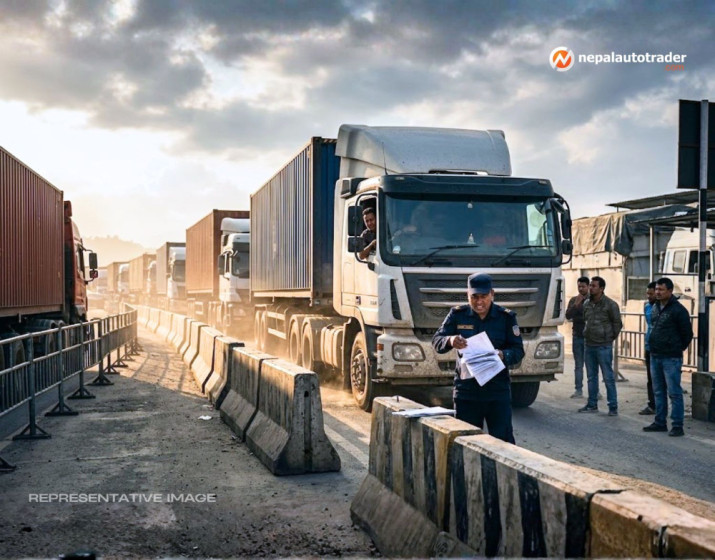
The controversy began after concerns surfaced that a large number of electric vehicles had entered Nepal ahead of the national budget amid speculation that taxes could increase. The unusually high volume of imports prompted scrutiny from policymakers and industry observers alike.
In response, the Ministry of Finance formed a monitoring committee led by a director from the Department of Customs. Its mandate was straightforward, determine whether customs procedures had been properly followed during the clearance of imported EVs through key northern border points. The findings have now put Rasuwa Customs under intense scrutiny.
According to the committee's field investigation, customs personnel at Rasuwagadhi Customs failed to exercise adequate caution and did not fully discharge their official responsibilities during the clearance process.
More concerning was the finding that certain vehicles were reportedly processed and cleared before physically reaching the customs premises. Investigators concluded that some clearances were carried out solely on the basis of documentation rather than actual vehicle inspection, a practice that runs contrary to established customs procedures.
Here's the thing. Customs clearance is built on verification. When physical inspection is bypassed, confidence in the entire process comes into question.
| Investigation Area | Finding | Status |
|---|---|---|
| Rasuwa Customs | Procedural negligence identified | Action initiated |
| Vehicle Verification | Some units cleared before physical arrival | Confirmed by monitoring team |
| Document Review | Records and declarations examined | Completed |
| CCTV Analysis | Used during investigation | Reviewed |
The report has already produced significant consequences.
The government has initiated departmental proceedings against 13 customs employees, including the former head of the office. Authorities have moved to suspend the officials while formal action proceeds.
The decision signals that the government views the findings as more than a procedural oversight. By targeting senior and operational staff, officials appear intent on reinforcing accountability within the customs administration.
For an industry that has become increasingly dependent on imported EVs, regulatory credibility is every bit as important as tax policy.
The investigation did not stop with government officials.
The Department of Customs has issued notices under prevailing customs laws to several electric vehicle importers and customs clearance representatives allegedly linked to the transactions under review.
Entities named in the report include:
The notices do not automatically imply wrongdoing, but they indicate that authorities believe further examination is warranted.
Not everyone will notice it immediately, but the implications could extend well beyond a single customs office.
While Rasuwa drew criticism, the same investigation reached a very different conclusion regarding Mustang Customs.
The committee reviewed nine customs declarations, office records and CCTV footage related to vehicles cleared on Jestha 12 and 13. Its assessment concluded that all 649 vehicles examined had entered Nepal before customs clearance was granted.
Investigators found no evidence of procedural irregularities in Mustang, creating a stark contrast with the findings at Rasuwa.
| Customs Point | Vehicles Reviewed | Committee Conclusion |
|---|---|---|
| Rasuwa | Under investigation | Negligence identified |
| Mustang | 649 vehicles | Procedures followed properly |
Nepal's electric vehicle sector has expanded rapidly in recent years, with imports becoming a major component of the automotive market. As volumes increase, customs oversight becomes even more critical.
The issue is not simply about paperwork. It touches revenue collection, regulatory compliance and market fairness. If some vehicles receive clearance without the required physical verification, questions naturally emerge about consistency and enforcement.
Industry stakeholders will now watch closely to see how the government proceeds with disciplinary action and whether additional procedural safeguards are introduced.
And that's important. The credibility of customs procedures affects every importer, every dealer and ultimately every customer waiting for a new electric vehicle.
Q: Why was the monitoring committee formed?
A: The committee was formed after questions emerged over a surge in EV imports before the national budget and concerns that information about potential tax changes may have circulated in advance.
Q: What did investigators find at Rasuwa Customs?
A: Investigators found that some EVs were reportedly cleared based on documentation before physically arriving at customs, indicating procedural negligence.
Q: How many officials face action?
A: The government has initiated action against 13 customs officials, including the then office chief at Rasuwa Customs.
Q: Were any importers named in the investigation?
A: Yes. Several importers and customs clearance representatives received notices under applicable customs laws for further examination.
Q: Did the investigation find problems at Mustang Customs?
A: No. The committee concluded that the reviewed vehicles at Mustang Customs were cleared only after entering Nepal and found no procedural violations.
Q: What happens next?
A: Departmental proceedings against officials and legal reviews involving the named companies and representatives are expected to continue in the coming weeks.

Nepal Auto-Trader is one-stop platform for all automotive needs. We provide unbiased and unparalleled news/reviews of all auto-motives being launched in Nepalese Auto-Industry. Find recent updates and price of bikes/cars, compare and review recently launched bikes/cars, buy/sell/trade reconditioned cars/bikes and all government news about changing rules and regulation, road safety by subscribing us.

Subscribe to our Newsletter
© Copyright 2026, Nepal Autotrader



.png)
.png)