

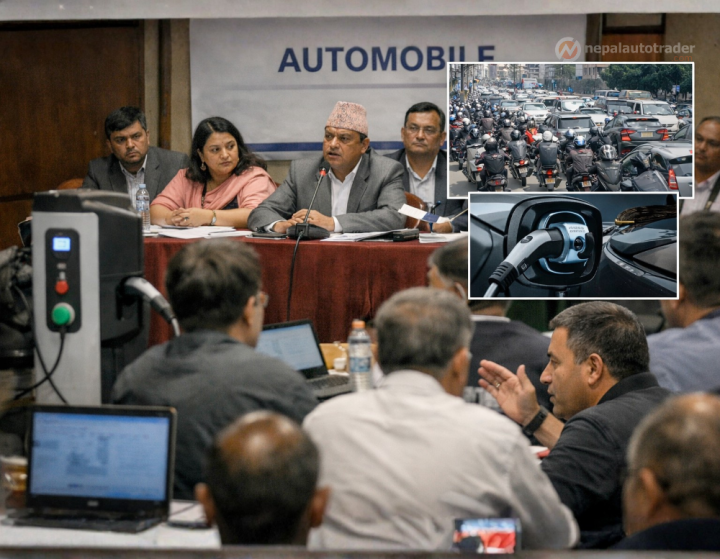
Nepal’s new government brings political stability opening the way for clear automotive policies
Industry professionals expect structured vehicle import rules and tax regulations
Electric vehicle adoption and charging infrastructure likely to see major support
Dealers anticipate reduced uncertainty and smoother business operations
Road safety and traffic management improvements are expected
Sustainable transport focus could attract investment in Nepal’s EV market
Consumer benefits include lower vehicle costs and better financing options
Political stability in Nepal offers a rare opportunity for the automotive industry to evolve. With the new government in place, stakeholders are optimistic that long-delayed reforms in vehicle import policies, taxation, and electric vehicle adoption will finally take shape.
For consumers and dealers alike, the promise of consistent policy provides the foundation to plan purchases, investments, and operations with confidence.
Nepal’s automotive sector has long been affected by policy inconsistency. Dealers face difficulties with inventory planning while consumers struggle with unpredictable pricing. The industry now sees potential to overcome these obstacles with structured governance.
Key expectations include
Clear policies to encourage electric vehicle adoption
Simplified vehicle import procedures
Stable tax structures that help maintain competitive pricing
Road infrastructure improvements aligned with growing vehicle demand
Although specific models are not the focus, industry trends suggest that Nepal’s EV market will grow significantly. Consumers can expect vehicles with
Battery ranges between 300 and 500 km suitable for city and intercity travel
Access to both AC and DC fast-charging networks in major cities
Smart connectivity features and advanced safety systems
Affordable electric two-wheelers and compact cars for urban mobility
A stable policy environment provides advantages for all parties involved. For dealers it means smoother operations and planning. For consumers it translates into
Lower vehicle prices due to reduced import and tax uncertainties
Expanded availability of electric vehicles in showrooms
Financing options and leasing solutions for affordability
Promotion of sustainable transport to reduce emissions
Nepal has the potential to catch up with neighboring countries in EV adoption and automotive growth.
| Feature | Nepal | India | China |
|---|---|---|---|
| EV Incentives | Pending structured policies | Subsidies and GST reductions | Subsidies and city-level incentives |
| Charging Infrastructure | Limited | Expanding | Extensive |
| Vehicle Import Rules | Historically inconsistent | Stable | Stable |
| Market Growth Potential | High | Moderate | High |
With reforms, Nepal can become an attractive market for international automotive brands seeking early entry in South Asia.
Nepal’s automotive sector is at a turning point. Political stability and policy clarity are expected to drive EV adoption, improve traffic management, and encourage investment. Dealers and consumers can anticipate more predictable vehicle costs and smoother import operations.
The next five years will be critical in transforming Nepal into a structured and sustainable automotive market, making it a key period for growth and opportunity.

Nepal Auto-Trader is one-stop platform for all automotive needs. We provide unbiased and unparalleled news/reviews of all auto-motives being launched in Nepalese Auto-Industry. Find recent updates and price of bikes/cars, compare and review recently launched bikes/cars, buy/sell/trade reconditioned cars/bikes and all government news about changing rules and regulation, road safety by subscribing us.

Subscribe to our Newsletter
© Copyright 2026, Nepal Autotrader



.png)
.png)