

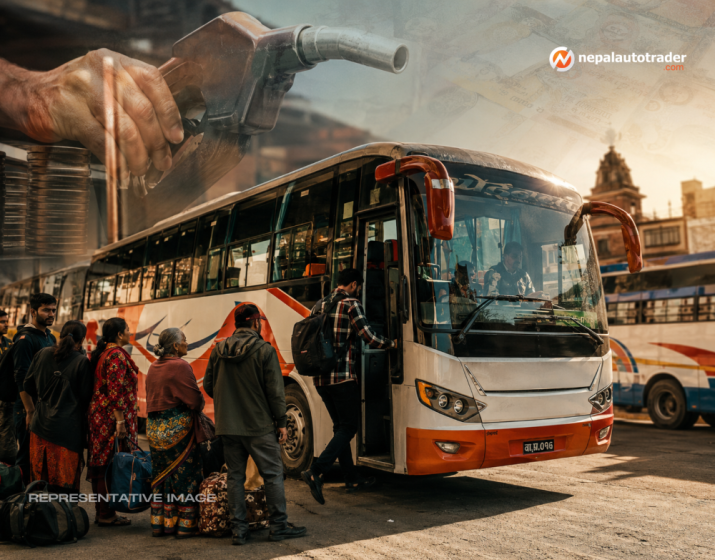
The Department of Transport Management has announced a 2 percent reduction in fares for inter provincial public transport services, a decision that has immediately drawn criticism from passengers and transport observers. Expectations had been far higher after fuel prices fell by more than 18 percent, creating widespread anticipation that transport costs would follow a similar downward trend.
Instead, the announced reduction is modest. For many commuters, it feels less like meaningful relief and more like a symbolic adjustment. The timing is particularly significant given the sustained decline in fuel costs, one of the biggest operating expenses for public transport operators.
The controversy is not simply about the size of the reduction. It is about consistency.
According to the department's own scientific fare adjustment system, public transport fares should be automatically revised whenever fuel prices increase or decrease by 5 percent or more. With fuel prices reportedly falling by over 18 percent, many expected a substantially larger fare revision.
| Metric | Reported Figure | Department Policy |
|---|---|---|
| Fuel price movement | More than 18 percent decrease | Triggers automatic fare review |
| Minimum threshold | 5 percent change | Fare adjustment required |
| Actual fare reduction | 2 percent | Applied to inter provincial services |
That gap between policy and implementation has become the central issue. Critics argue the department has undermined confidence in its own scientific pricing mechanism by approving a reduction that appears disconnected from the scale of the fuel price decline.
The announcement also comes with an important limitation.
The revised fares will apply only to inter provincial public transport. Passengers travelling within Kathmandu Valley and those using inter district routes will not receive any fare reduction under the latest revision.
For consumers, the change could be substantial only on selected long distance routes. Everyone else will continue paying existing fares despite the significant reduction in fuel prices.
Transport fares affect millions of passengers every day. That is why predictable and transparent pricing matters as much as the final fare itself.
When authorities establish a scientific formula, passengers naturally expect it to be followed consistently. If exceptions are made without clear public explanation, confidence in the system begins to weaken. The real challenge is not simply the 2 percent reduction, it is explaining why an established formula appears to have produced a very different outcome.
| Category | Status |
|---|---|
| Fare reduction | 2 percent |
| Fuel price trend | More than 18 percent decrease |
| Implementation date | Asar 18 |
| Coverage | Inter provincial routes only |
The implications extend far beyond a single fare revision. Future adjustments will likely face closer public scrutiny as passengers compare official decisions with the department's published methodology.
Q: How much have public transport fares been reduced?
A: The Department of Transport Management has announced a 2 percent reduction for inter provincial public transport services.
Q: When will the new fares take effect?
A: The revised fares are scheduled to become effective from Asar 18.
Q: Will Kathmandu Valley buses charge lower fares?
A: No. The announced fare reduction does not apply to public transport operating within Kathmandu Valley.
Q: Why has the decision attracted criticism?
A: Critics argue that fuel prices have fallen by more than 18 percent, while the department's own framework calls for fare adjustments when fuel prices change by at least 5 percent. The 2 percent reduction has therefore raised questions about how the formula has been applied.

Nepal Auto-Trader is one-stop platform for all automotive needs. We provide unbiased and unparalleled news/reviews of all auto-motives being launched in Nepalese Auto-Industry. Find recent updates and price of bikes/cars, compare and review recently launched bikes/cars, buy/sell/trade reconditioned cars/bikes and all government news about changing rules and regulation, road safety by subscribing us.

Subscribe to our Newsletter
© Copyright 2026, Nepal Autotrader



.png)
.png)