

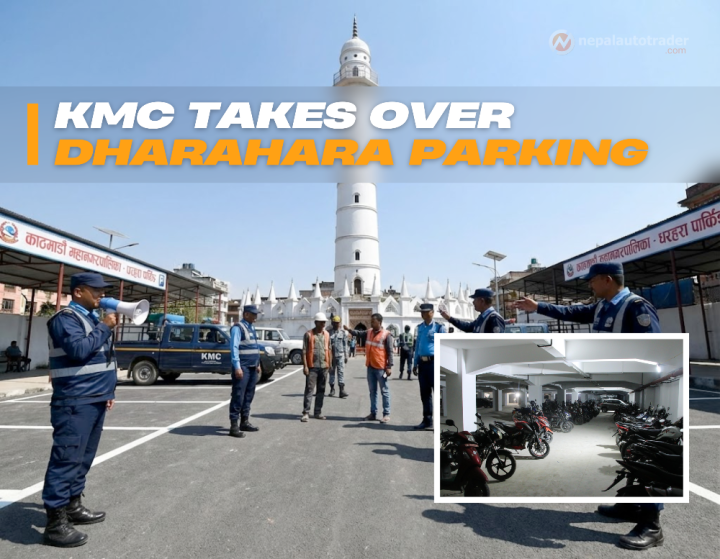
The historic Dharhara tower sits in the heart of Kathmandu’s bustling Suwondhara district. For years the Department of Urban Development handled the surrounding parking lot, but the space has become a choke point for traffic and a magnet for illegal parking. The joint meeting on Friday, Falgun 8, 2082 marked a decisive shift: the city will now own both the infrastructure and the enforcement.
That matters because the city’s police unit can respond faster than a central ministry. It also means revenue from parking can be reinvested directly into local road maintenance. The move signals a broader trend of decentralising municipal services in Nepal.
Two senior officials fronted the announcement. Sunita Dangol, acting chief of Kathmandu Metropolitan City, said the municipality will take charge of the “outer structure” of Dharhara, ensuring proper upkeep and security. Kumar Innam, Minister of Urban Development, confirmed that the city will bear the full financial responsibility for the project. The meeting also featured Om Prakash Aryal, Minister of Home Affairs, underscoring the cross‑departmental importance.
A joint committee has been created to draft both immediate actions and a five‑year master plan. The committee will include representatives from the urban development ministry, the metropolitan office, and the police force. Their mandate: study operational modalities, recommend technology upgrades, and propose a sustainable financing model.
| Phase | Date | Status |
|---|---|---|
| Decision | Friday, Falgun 8, 2082 | Approved by joint government‑city meeting |
| Immediate rollout | Within 7 days of decision | Police patrols, signage, fee collection start |
| Committee formation | Week 2 after decision | Members appointed, first briefing held |
| Long‑term plan draft | End of month 1 | Preliminary report on digital ticketing and capacity expansion |
| Implementation phase 1 | Month 3 onward | Installation of electronic gates and payment kiosks |
The schedule is tight but realistic. The city’s police force will already be on the ground, so the first two phases can be executed without delay. The committee’s work will shape the next three months, laying the groundwork for a modern, cash‑less system.
These adjustments matter because they address the core complaints of congestion and safety that have plagued the area for years. Drivers will spend less time circling for a spot, and tourists will find a more predictable experience when visiting the iconic tower.
Kathmandu’s decision fits into a national push to modernise urban services. By shifting responsibility to the municipal level, the city can tailor solutions to local traffic patterns and tourist flows. The joint committee is expected to recommend a smart‑parking platform that integrates with the city’s broader traffic‑management system.
If successful, Dharhara could become a showcase project for other heritage sites across Nepal, demonstrating how heritage preservation and modern mobility can coexist. The approach also opens the door for public‑private partnerships, where tech firms could supply the digital infrastructure in exchange for a share of the revenue.
Q: When will the new parking system be fully operational? A: The initial security and signage rollout starts within a week of the decision on Friday, Falgun 8, 2082. Full digital payment and gate installation are slated for the third month after the hand‑over.
Q: Who is responsible for collecting parking fees? A: The Kathmandu Metropolitan City will collect fees through the newly introduced mobile app and on‑site kiosks, with revenue feeding directly into city‑level road‑maintenance budgets.
Q: Will there be any changes to the current parking rates? A: A tiered pricing model based on vehicle size and duration will replace the flat rate that existed under the Urban Development Ministry. Exact figures will be posted on the city’s website before the system goes live.
Q: How will security be improved? A: Uniformed Police Force officers will patrol the lot 24 hours a day, and CCTV cameras will be installed at all entry points. This dual approach tackles both theft and illegal parking.
Q: What is the role of the joint committee? A: The committee, comprising officials from the Department of Urban Development, the metropolitan office, and the police, will draft short‑term actions and a five‑year master plan, including technology upgrades and financing strategies.
Q: Can tourists expect any special accommodations? A: Yes. The upcoming digital platform will support multiple languages and allow visitors to reserve spots in advance, simplifying the experience for international guests.
PREVIOUS NEWS
NEXT NEWS

Nepal Auto-Trader is one-stop platform for all automotive needs. We provide unbiased and unparalleled news/reviews of all auto-motives being launched in Nepalese Auto-Industry. Find recent updates and price of bikes/cars, compare and review recently launched bikes/cars, buy/sell/trade reconditioned cars/bikes and all government news about changing rules and regulation, road safety by subscribing us.

Subscribe to our Newsletter
© Copyright 2026, Nepal Autotrader



.png)
.png)