

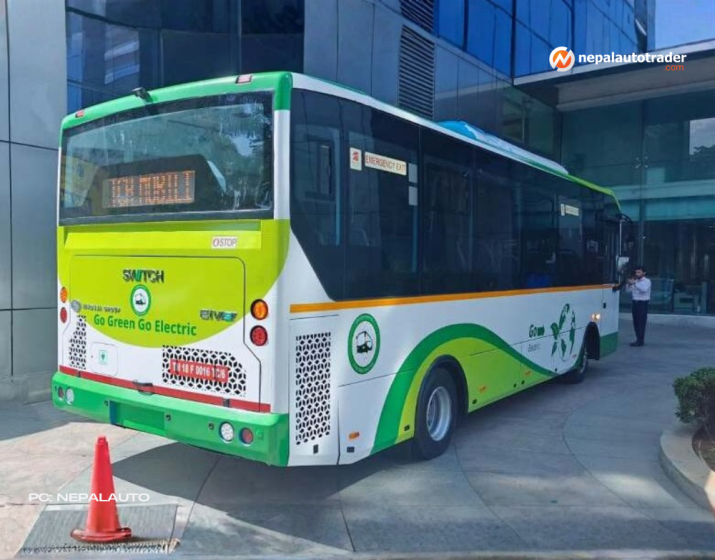
There’s a certain weight to the phrase IME electric city bus, not because of what has already been revealed, but because of what it represents. In Nepal’s evolving transport landscape, even a single committed push toward electrified public transit carries more significance than it might elsewhere.
The reporting around this project is still restrained. No loud claims. No oversized promises. Just a steady indication that IME Group is preparing to introduce an electric city bus into the country’s urban transport system. And that alone is enough to shift conversations inside mobility circles.
This isn’t happening in isolation. Kathmandu, like many rapidly growing cities, has been under pressure from congestion, aging diesel fleets, and air quality concerns that refuse to fade quietly. The introduction of an electric public transport bus sits directly in the middle of that tension.
Here’s the thing. Even without full technical disclosure, the direction matters more than the detail right now. That matters.
Details in the original reporting remain limited, which is not unusual for early-stage mobility rollouts in emerging EV markets. What has been indicated is straightforward, an electric city bus initiative tied to IME’s broader mobility ambitions.
No confirmed numbers on battery capacity, passenger count, or drivetrain configuration have been disclosed in the available information. And rather than forcing assumptions, it’s more honest to map what is clear and what is still open.
| Category | Status | Notes |
|---|---|---|
| Vehicle Type | Electric city bus | Designed for urban public transport use |
| Developer | IME Group | Expanding into mobility sector |
| Powertrain Specs | Not disclosed | No verified technical figures available |
| Launch Timeline | Not officially specified | Reported as upcoming initiative |
The absence of technical data doesn’t weaken the story. If anything, it signals a project still in its shaping phase. And in automotive journalism, early silence often means infrastructure alignment is still underway.
What tends to follow is clearer definition, procurement cycles, and eventually route-level deployment planning. Not overnight. Never overnight.
Nepal’s transport system has been slowly tilting toward electrification for years, largely driven by necessity rather than trend-chasing. Fuel import dependency, urban air quality concerns, and traffic density all converge into one uncomfortable reality.
An electric city bus initiative doesn’t solve everything. But it does something important. It shifts the center of gravity.
Not every city notices these changes immediately. But commuters do. Drivers do. Fleet operators certainly do.
And that’s where this becomes interesting. Because once electric buses enter daily circulation, they stop being policy talking points and start becoming routine infrastructure. Familiar. Expected. Normal.
That transition is slow, then sudden.
IME Group is widely recognized for its diversified business footprint, but mobility projects like this push it into a more visible, operationally complex space. Public transport is not a side venture. It is logistics, uptime management, route efficiency, and passenger trust bundled into one system.
This move suggests something broader than a single vehicle introduction. It suggests an attempt to participate in the shaping of Nepal’s urban mobility ecosystem.
Electric buses are not just vehicles. They are networked assets. Charging schedules matter. Depot placement matters. Even driver training becomes part of the product lifecycle.
In that sense, IME is not just entering a market. It is stepping into a system that already has momentum, friction, and expectations.
And not everyone will notice it immediately, but this is where long-term transport shifts usually begin.
Kathmandu’s transport reality is shaped by density and constraint. Narrow routes, heavy traffic, and inconsistent fleet modernization have created a system where efficiency is often reactive rather than planned.
The arrival of an electric city bus changes one variable in that equation, operational predictability. Electric drivetrains typically reduce mechanical complexity, which in public transport translates into more consistent uptime if infrastructure is aligned.
But there’s a catch. Infrastructure always decides the pace.
Without stable charging networks and fleet integration planning, even the most advanced bus remains a constrained asset. This is where coordination between private operators and public bodies becomes critical.
There is also a competitive backdrop forming. Regional manufacturers and Chinese EV suppliers have already positioned themselves aggressively in South Asian transport electrification. IME’s move places it inside that evolving field, not outside it.
It is easy to frame electric bus announcements as symbolic wins. Cleaner air, modern fleets, future-ready cities. All of that is true, but incomplete.
The real test will be operational. Route stability. Maintenance cycles. Battery performance in real urban conditions. These are not showroom questions, they are daily reality checks.
What makes the IME electric city bus story worth tracking is not what it is today, but what it becomes once it hits the road. Public transport either integrates smoothly or exposes gaps quickly. There is rarely a middle ground.
And Nepal’s transport ecosystem is at that exact inflection point. Still forming, still adjusting, still deciding how fast it wants to change.
IME’s entry adds momentum. The rest depends on execution.
No dramatic conclusions yet. Just a system quietly preparing for its next version.
Q: What is the IME electric city bus project?
A: It is a planned initiative by IME Group to introduce an electric city bus for urban public transport in Nepal. It aims to support cleaner mobility solutions in major cities like Kathmandu.
Q: Has the IME electric bus been launched in Nepal?
A: No confirmed launch has been reported yet. The project is described as upcoming, with detailed rollout timelines still not officially disclosed in available reporting.
Q: What makes electric city buses important for Nepal?
A: Electric buses reduce dependence on fossil fuels, lower urban emissions, and support quieter city transport systems. They also encourage infrastructure upgrades like charging stations.
Q: Who is developing the IME electric bus?
A: The project is being developed by IME Group, a diversified Nepal-based conglomerate expanding into mobility and transport solutions.
Q: How does this compare with other electric mobility efforts in Nepal?
A: Nepal has seen strong adoption in electric two-wheelers. Electric buses represent a more complex stage, requiring larger infrastructure and coordinated transport planning.

Nepal Auto-Trader is one-stop platform for all automotive needs. We provide unbiased and unparalleled news/reviews of all auto-motives being launched in Nepalese Auto-Industry. Find recent updates and price of bikes/cars, compare and review recently launched bikes/cars, buy/sell/trade reconditioned cars/bikes and all government news about changing rules and regulation, road safety by subscribing us.

Subscribe to our Newsletter
© Copyright 2026, Nepal Autotrader



.png)
.png)