

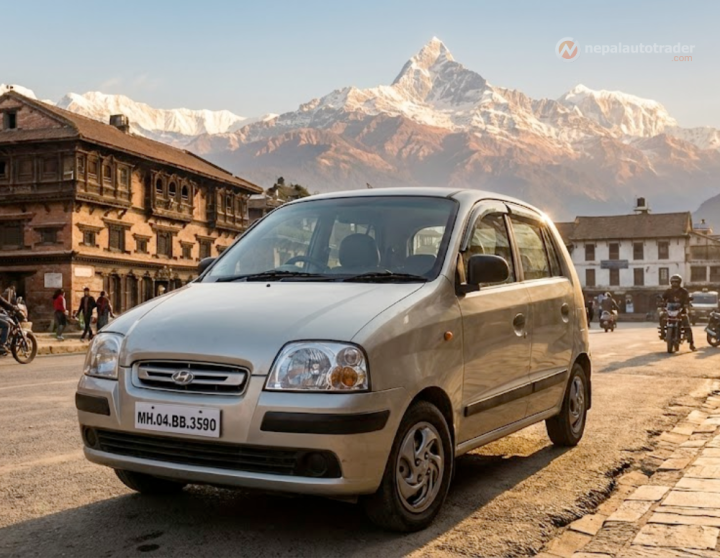
When the first Hyundai Santro rolled off the port of Biratnagar in late 1999, the Nepalese market was dominated by Japanese hatchbacks and a few aging Indian makes. The road network was still a patchwork of gravel and narrow lanes, and buyers prized durability above all. Hyundai’s entry, backed by Lakshmi Intercontinental, offered a fresh blend of reliability, low‑cost maintenance, and respectable fuel efficiency – a combination that resonated instantly. That matters because it gave Nepali families a credible alternative to the status‑quo.
The Santro’s journey can be plotted as a simple timeline. Each point reflects a market‑shaping event, from the first showroom launch to the anniversary outreach.
| Phase | Date | Key Development |
|---|---|---|
| Entry | 1999‑12‑15 | First units imported, priced competitively for first‑time buyers |
| Peak Sales | 2005‑06‑01 | Annual sales hit 3,200 units, small‑car segment share rose 18 % |
| Anniversary Call‑out | 2024‑02‑26 | Owners of 2000‑model Santro invited to contact Hyundai Nepal |
| Legacy Transition | 2026‑02‑01 | Hyundai announces new EV lineup, citing Santro’s brand‑building role |
The original 2000‑model Santro was simple, but every figure was tuned for the rugged Nepali environment. Below is a snapshot of the most referenced specifications.
| Specification | Value |
|---|---|
| Engine | 0.8 L G4HG petrol, 8 kW (11 hp) @ 5,500 rpm |
| Torque | 13 Nm @ 3,000 rpm |
| Fuel Economy | ≈ 19 km/L (combined) |
| Wheelbase | 2,340 mm |
| Length | 3,495 mm |
| Ground Clearance | 165 mm |
These numbers mattered on Kathmandu’s steep climbs and the pothole‑laden streets of Pokhara. The modest power output kept ownership costs low, while the high ground clearance prevented under‑body damage – a frequent complaint with imported Japanese hatchbacks.
That matters because a strong brand foundation allowed Hyundai to introduce higher‑priced models like the Palisade without a steep learning curve for consumers. The company now leverages the Santro’s legacy in its marketing for the upcoming EV lineup.
The 25‑year anniversary is not a farewell but a springboard. Hyundai Nepal has announced:
These moves signal that Hyundai intends to stay relevant across price tiers, from the most affordable hatchback to premium electric SUVs. The Santro’s story proves that a well‑executed small car can rewrite market dynamics – and the brand appears ready to repeat that formula.
Q: When did the Hyundai Santro first launch in Nepal? A: The first Santro arrived on 15 December 1999, imported by Lakshmi Intercontinental.
Q: What engine does the original 2000‑model Santro use? A: It is equipped with a 0.8 L G4HG petrol engine delivering 8 kW (11 hp) at 5,500 rpm.
Q: How did the Santro affect small‑car sales in Nepal? A: Small‑car registrations grew 18 % in the three years following its introduction, according to Nepalese transport data.
Q: Is there a special program for 2000‑model owners? A: Yes, owners are invited to contact Hyundai Nepal for a surprise reward and a chance to join the limited‑edition Heritage badge rollout.
Q: Will the Santro legacy influence upcoming Hyundai EVs? A: Hyundai plans to use the Santro’s brand‑trust to promote the Kona Electric and Ioniq 5, offering trade‑in discounts for Santro owners.
Q: Where can I find service for my Santro in the Terai? A: Lakshmi Intercontinental is expanding its workshop network; new service centers are slated for Birgunj and Janakpur by 2027.

Nepal Auto-Trader is one-stop platform for all automotive needs. We provide unbiased and unparalleled news/reviews of all auto-motives being launched in Nepalese Auto-Industry. Find recent updates and price of bikes/cars, compare and review recently launched bikes/cars, buy/sell/trade reconditioned cars/bikes and all government news about changing rules and regulation, road safety by subscribing us.

Subscribe to our Newsletter
© Copyright 2026, Nepal Autotrader



.png)
.png)