

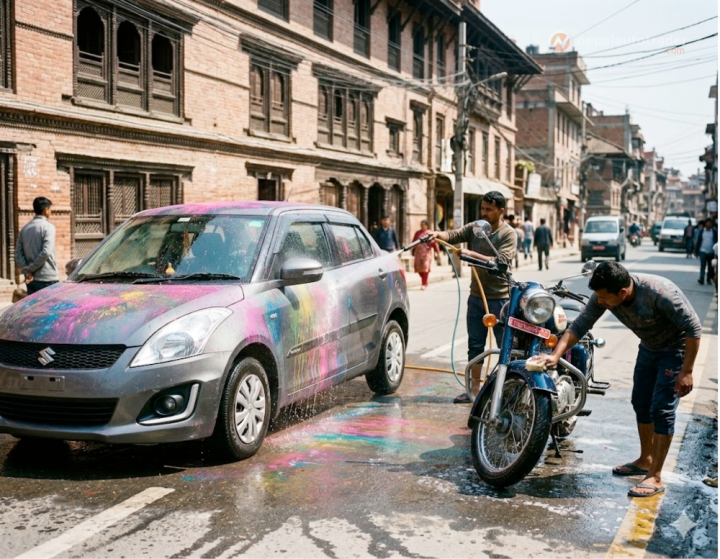
The moment the powder settles, it begins to bond with the clear coat. That matters because once the pigment dries, it etches into the surface and becomes far harder to lift. A quick rinse can stop the chemistry in its tracks. In Kathmandu’s post‑festival traffic, you’ll see countless bikes and cars with faded spots – a visual reminder that delay equals damage.
Holi powders are primarily starch‑based pigments mixed with a tiny amount of adhesive. When water contacts them, the starch swells, loosening the pigment particles. Acidic agents like vinegar or lemon juice break down the adhesive, while mildly abrasive substances such as baking soda or toothpaste lift the stain without gouging the paint. This balance of chemical softening and mechanical agitation is what makes a home‑based clean‑up effective.
Below is a concise workflow that anyone with a pressure gun or garden hose can follow. The steps are ordered for maximum efficiency, and the accompanying table lists the recommended material for each stage.
| Step | Action | Recommended Material |
|---|---|---|
| 1 | Rinse with low‑pressure water to wet the area | Garden hose, 30 psi |
| 2 | Apply pressure‑gun spray for 30‑seconds | Pressure gun, 50‑60 psi |
| 3 | Spot‑treat stubborn patches | Mix 1 part lemon juice with 2 parts water, or a paste of baking soda and water |
| 4 | Gently rub with micro‑fiber cloth | Premium micro‑fiber towel |
| 5 | Final rinse and dry | Soft microfiber drying cloth |
Key point: The pressure gun does the heavy lifting, removing roughly 50‑60% of the color. The micro‑fiber step finishes the job, restoring the original shine.
These items cost less than NPR 500 in total, making the process affordable for most Nepali motorists.
Applying excessive pressure can micro‑scratch the clear coat, especially on older vehicles. That matters because a scratch becomes a pocket for rust. Also, avoid abrasive pads like old rags or steel wool – they will grind the paint rather than lift the pigment. Finally, never use chlorine‑based cleaners; they react with the clear coat and cause discoloration.
The automotive industry in Nepal is experimenting with biodegradable cleaning agents derived from neem oil and citrus peels. Such products promise the same stain‑lifting power without the environmental load of synthetic chemicals. As manufacturers roll out these green options, the DIY approach will become even safer for both the vehicle and the planet.
Q: Can I use a regular garden hose instead of a pressure gun? A: A garden hose will remove some pigment, but without the high‑velocity spray you’ll likely need multiple rinses. For best results, a pressure gun set to 50‑60 psi is recommended.
Q: How soon after Holi should I start cleaning? A: Begin within an hour. The longer the powder sits, the deeper it penetrates the clear coat, making removal harder.
Q: Will vinegar damage my car’s paint? A: Diluted vinegar (1 part vinegar to 2 parts water) is safe on most finishes. Rinse thoroughly afterward to avoid residue.
Q: Is it safe to use toothpaste on a motorcycle’s chrome parts? A: Yes, a non‑gel toothpaste works on chrome, but test on a hidden spot first and rinse immediately.
Q: Where can I buy micro‑fiber towels in Nepal? A: Automotive accessory shops in Kathmandu, as well as major supermarkets, stock them. Look for the label “ultra‑soft micro‑fiber.”
Q: Will these methods remove all colors, even deep reds? A: Most pigments lift completely if treated promptly. Deep reds may need a second spot‑treatment with a lemon‑vinegar mix.

Nepal Auto-Trader is one-stop platform for all automotive needs. We provide unbiased and unparalleled news/reviews of all auto-motives being launched in Nepalese Auto-Industry. Find recent updates and price of bikes/cars, compare and review recently launched bikes/cars, buy/sell/trade reconditioned cars/bikes and all government news about changing rules and regulation, road safety by subscribing us.

Subscribe to our Newsletter
© Copyright 2026, Nepal Autotrader



.png)
.png)