

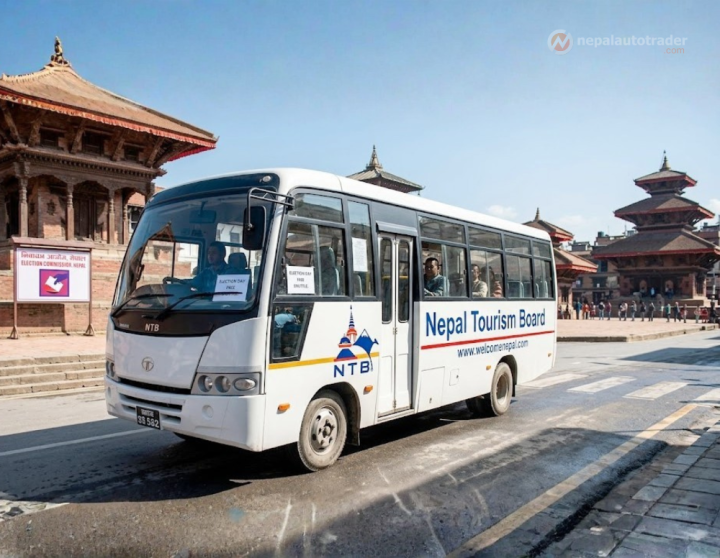
The Nepal Tourism Board announced on Falgun 21 that it will provide complimentary shuttle buses for the election holiday. The move addresses two main concerns: the surge of passengers traveling between the airport and city hotels, and the need to maintain smooth traffic flow while polling stations operate. By offering a direct connection from the airport to key hotel districts, the board aims to keep visitors on schedule and reduce reliance on private taxis, which often increase street congestion.
The board introduced three distinct routes, each looping back to the airport. All buses begin at 5 am, stop at designated locations, and operate until 7 pm. The routes are:
| Route | Key Stops | Operating Window |
|---|---|---|
| Route 1 | NAC, New Road, Kantipath, Thamel, Lainchaur, Malla Hotel, Nayabazar, Shankar Hotel, Yadison, Durbar Marg, Yak & Yeti, Naxal, Gaushala, Battisputali (Dwarika’s Hotel) | 5 am – 7 pm |
| Route 2 | Maharajgunj Chowk, Narayanthan Chowk, Dhumbarahi (Ramada Hotel), Chabahil, Boudha (Hyatt Regency), Jorpati Chowk, Chabahil, Gaushala | 5 am – 7 pm |
| Route 3 | Himalayan Hotel (Kupondole), Tripureshwor, Kalimati, Soltimode, Kalanki, Ekantakuna, Satdobato, Gwarko (Royal Tulip), Tinkune, New Baneshwor, Everest Hotel | 5 am – 7 pm |
Each bus follows its designated route both to and from the airport. Passengers may board at any listed stop and travel directly to the airport or back to their hotel. The service is completely free; no ticket or reservation is required. Drivers will display a Shuttle Bus badge and a route number board.
The board’s decision reflects a broader effort to integrate tourism infrastructure with major civic events. By eliminating cost barriers, the board aims to maintain high visitor satisfaction even on a public holiday when many businesses are closed.
Providing a free shuttle during a national election is uncommon in Nepal. It demonstrates a willingness by tourism authorities to support public service functions when broader economic activity is affected. If the pilot is successful, similar collaborations may occur during festivals, major conferences, or other high-traffic periods.
This initiative may also encourage private transport operators to improve service standards. When a government-operated bus is punctual and well-maintained, passenger expectations increase for taxis and ride-hailing services. Over time, the Nepal Tourism Board could help drive improvements in the urban mobility system.
The board will monitor passenger numbers and collect feedback through a QR-code survey available on each bus. These results will determine whether the service expands to other holidays or becomes permanent.
Q: Is there a passenger limit per bus?
A: Buses follow standard capacity regulations, typically around 30 seats. No reservation is required, but arriving early improves your chances of securing a seat.
Q: Will the shuttle operate on weekends after the election?
A: The free service is available only on the election holiday, Falgun 21. Regular airport shuttles will resume according to individual hotel schedules.
Q: Are the buses wheelchair accessible?
A: Yes. Each bus has low-floor entry and designated wheelchair space in compliance with accessibility standards.
Q: Can I travel between hotels without going to the airport?
A: The routes are designed to connect hotels with the airport. While boarding at any listed stop is permitted, direct hotel-to-hotel travel without passing through the airport is not guaranteed.
Q: How will success be measured?
A: Ridership data, passenger satisfaction from the QR survey, and traffic flow analysis near the airport will serve as the primary evaluation metrics.
Q: Will this service continue for future elections?
A: The board has indicated that if the pilot meets expectations, free shuttle services may become standard on future national election days.

Nepal Auto-Trader is one-stop platform for all automotive needs. We provide unbiased and unparalleled news/reviews of all auto-motives being launched in Nepalese Auto-Industry. Find recent updates and price of bikes/cars, compare and review recently launched bikes/cars, buy/sell/trade reconditioned cars/bikes and all government news about changing rules and regulation, road safety by subscribing us.

Subscribe to our Newsletter
© Copyright 2026, Nepal Autotrader



.png)
.png)