

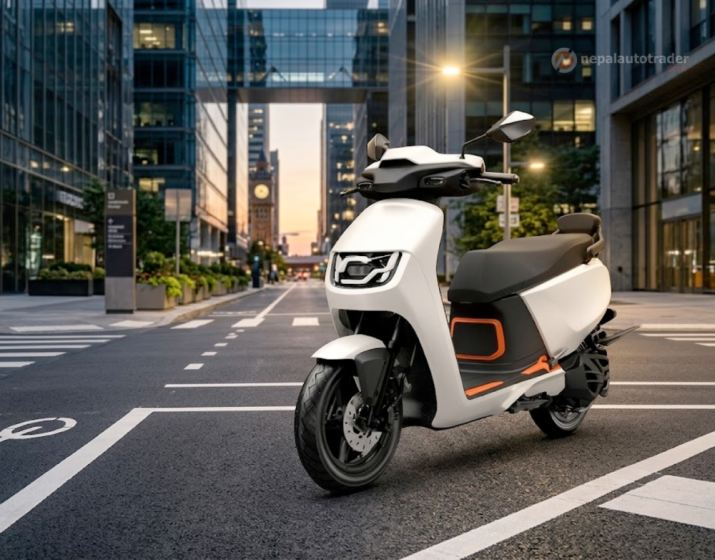
Hero MotoCorp is expanding its electric mobility ambitions with the upcoming Vida Z, a new family-oriented electric scooter developed under the company’s Vida EV brand. The scooter first appeared publicly at EICMA 2024 and has since been spotted testing in India ahead of its expected market rollout.
The new scooter matters for one reason in particular. Hero is no longer chasing only premium EV buyers. The company now wants volume, accessibility and wider household adoption. That changes the conversation.
The design language of the Vida Z moves away from aggressive styling and leans toward a more approachable urban commuter format. Spy images and showcase models reveal a flatter seat, a broad floorboard and softer body panels designed around daily practicality.
The scooter gets an LED headlamp setup with integrated daytime running lights, while the rear section includes a grab rail with integrated pillion backrest. Reports from international showcase coverage suggest the styling has been tuned for both Indian and European buyers.
This is not accidental. Hero MotoCorp appears to be targeting mainstream scooter users instead of only early EV adopters.
| Design Element | Details |
|---|---|
| Headlamp | LED setup with integrated DRLs |
| Seat Layout | Single-piece flat seat |
| Footboard | Flat floor design for practicality |
| Battery Access | Removable battery system |
| Target Audience | Urban family commuters |
The proportions also look more conventional than the existing Vida V1. That could help Hero attract traditional scooter buyers who are still hesitant about switching to EVs. Small details matter in this category. Very much.
The biggest talking point surrounding the Vida Z is its flexible battery architecture. According to official company material and showcase information, the scooter can support battery capacities starting from 2.2 kWh and extending up to 4.4 kWh.
That opens several possibilities for Hero. Entry-level variants can target affordability, while larger battery versions can focus on range and performance.
| Specification | Confirmed Details |
|---|---|
| Battery Capacity Range | 2.2 kWh to 4.4 kWh |
| Motor Type | Permanent Magnet Synchronous Motor |
| Charging Type | Multiple charging modes |
| Battery Type | Removable battery setup |
| Connectivity | Cloud-connected platform with app support |
The removable battery setup remains one of the strongest talking points because several rivals in the segment still rely on fixed battery layouts. Hero believes this could reduce charging anxiety for apartment users and urban commuters without dedicated charging infrastructure.
That is a serious market advantage if executed properly.
The company has also confirmed that the scooter uses a new connectivity platform capable of features such as:
The feature list puts the scooter directly into competition with connected electric scooters from brands such as Ather, TVS iQube and Bajaj Chetak.
The timing of the Vida Z is important. India’s electric two-wheeler market has become brutally competitive over the last two years. Brands are now fighting on affordability, charging convenience and dealer reach instead of pure acceleration figures.
Hero MotoCorp already has the distribution muscle. What it lacked was broader EV penetration.
Industry reports indicate the company has been steadily increasing EV volumes under the Vida brand. The upcoming scooter is expected to strengthen Hero’s position in the sub-premium electric scooter category.
The strategy looks straightforward:
This changes things because the market is now entering its second phase. Early adopters bought EVs for novelty. Mainstream users want convenience, reliability and affordability.
The scooter has already been spotted testing on Indian roads, suggesting development is now moving closer to commercial rollout. Test models seen online carry styling very similar to the EICMA showcase unit.
Some reports suggest Hero could introduce a market-specific version under the VX2 naming strategy, although the company has not formally confirmed all market positioning details yet.
Spy images reveal a cleaner scooter silhouette with a more approachable family design. The test units also showed:
Industry observers expect Hero to place the scooter below some of its existing premium electric offerings. If that happens, the Vida Z could become the company’s volume-oriented EV product.
And frankly, that is exactly where the real battle is heading.
Hero MotoCorp unveiled the scooter at EICMA 2024, one of the motorcycle industry’s biggest international platforms. The move was symbolic.
The company clearly wants the Vida brand to grow beyond India.
Official statements surrounding the showcase described the scooter as a product developed with global audiences in mind. Markets such as the UK, France, Spain and Italy have also been mentioned in relation to Hero’s wider EV expansion plans.
This broader ambition matters because electric scooters are becoming increasingly global products. Battery flexibility, connected features and removable charging systems appeal to crowded urban markets far beyond India.
That makes the Vida Z more than just another commuter scooter. It is part of Hero’s long-term EV identity.
For now, full pricing and market-specific specifications remain under wraps. But the direction is already clear.
Ather Rizta, Ola Electric scooters and the Bajaj Chetak should probably pay attention.
Q: What is the battery capacity of the Vida Z?
A: The Vida Z supports modular battery options ranging from 2.2 kWh to 4.4 kWh. Hero says the platform has been designed to support multiple battery configurations.
Q: Does the Vida Z use removable batteries?
A: Yes. The scooter comes with a removable battery setup, allowing users to charge batteries separately from the scooter if needed.
Q: What motor does the Vida Z use?
A: Hero has confirmed that the scooter uses a Permanent Magnet Synchronous Motor (PMSM) drivetrain.
Q: Has Hero revealed the price of the Vida Z?
A: No official pricing details have been confirmed yet. Reports suggest Hero is targeting the affordable electric scooter segment.
Q: What features will the Vida Z offer?
A: Confirmed features include a TFT display, connected technology suite, geo-fencing support, vehicle tracking and removable battery functionality.
Q: Which scooters will compete with the Vida Z?
A: The scooter is expected to compete with electric scooters such as the Ather Rizta, TVS iQube, Bajaj Chetak and other family-focused EV offerings.

Nepal Auto-Trader is one-stop platform for all automotive needs. We provide unbiased and unparalleled news/reviews of all auto-motives being launched in Nepalese Auto-Industry. Find recent updates and price of bikes/cars, compare and review recently launched bikes/cars, buy/sell/trade reconditioned cars/bikes and all government news about changing rules and regulation, road safety by subscribing us.

Subscribe to our Newsletter
© Copyright 2026, Nepal Autotrader



.png)
.png)