

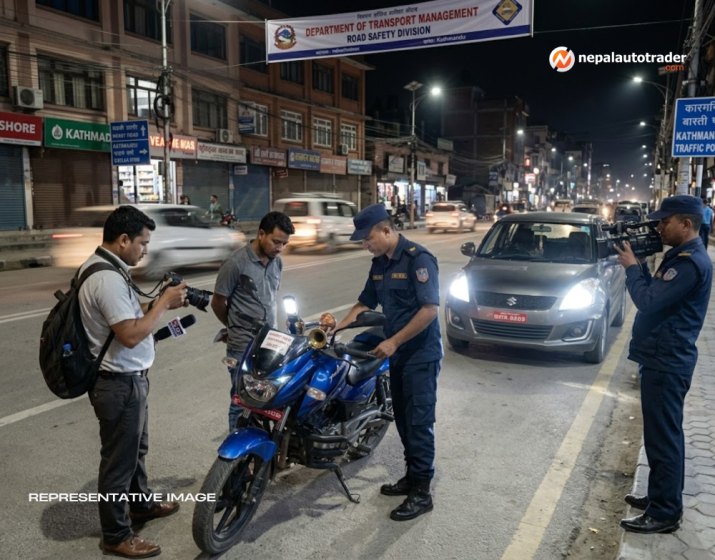
Nepal's Department of Transport Management has issued a fresh warning to vehicle owners and drivers, targeting one of the most visible trends on the country's roads, modified headlights and excessively loud horns. The notice makes it clear that motorists are not permitted to install lighting or horn systems that differ from manufacturer specifications or approved technical standards.
The announcement arrives as complaints continue to grow over blinding aftermarket lights and noise pollution generated by pressure horns. Anyone who spends time driving after dark in Kathmandu or on busy highways has likely encountered both.
And that's important.
For years, these modifications have existed in a grey area of enforcement. The latest warning suggests regulators want that ambiguity gone.
According to DoTM, authorities have observed vehicles installing powerful auxiliary lights near factory headlamp units and in other areas of the vehicle. These systems often exceed approved specifications and can create severe glare for oncoming traffic.
That glare is more than an annoyance. It can temporarily reduce visibility for drivers, riders, and pedestrians, especially on poorly lit roads.
The department highlighted the following concerns:
Road safety advocates have long argued that ultra-bright aftermarket systems often create more problems than they solve. Similar concerns have driven enforcement campaigns in other markets where non-approved LED and HID conversions became widespread.
Not everyone will notice it immediately. But even a few seconds of temporary blindness can be enough to trigger a serious crash.
The latest notice does not introduce new standards. Instead, it reinforces requirements already contained within Nepal's vehicle inspection framework.
| Specification | Approved Standard | Status |
|---|---|---|
| Low Beam Intensity | 15,000 to 30,000 candela | Permitted |
| High Beam Intensity | Below 100,000 candela per lamp | Permitted |
| Total Headlight Intensity | Below 200,000 candela | Permitted |
| Horn Sound Level | 90 dB to 112 dB | Permitted |
| Pressure Horns | Not Allowed | Prohibited |
The department stated that any vehicle operating outside these limits could face action under prevailing laws.
Here's the thing. Many enthusiasts assume brighter always means safer. Regulators disagree when those upgrades interfere with the visibility and comfort of everyone else using the road.
The warning also points to Section 39 of the Vehicle and Transport Management Act, 2049, which prohibits vehicle modifications without approval from the relevant authority. That provision covers far more than headlights and horns, extending to structural and technical changes made without authorization.
The legal position can be summarized quickly.
| Area | Requirement | Potential Outcome |
|---|---|---|
| Headlight Changes | Must comply with approved specifications | Legal action possible |
| Horn Modifications | Must remain within sound limits | Legal action possible |
| Pressure Horn Installation | Prohibited | Enforcement action |
| Vehicle Alterations | Require approval | Violation of Section 39 |
This is consistent with broader enforcement efforts seen across Nepal in recent years, particularly campaigns against modified exhaust systems, loud motorcycles, and unauthorized vehicle alterations.
Headlights grabbed attention, but the horn crackdown is equally significant.
Pressure horns and excessively loud warning systems have become increasingly common on some commercial vehicles and modified motorcycles. Authorities argue that these systems contribute directly to urban noise pollution and reduce overall road comfort.
Traffic police have already been pushing awareness campaigns aimed at unnecessary honking, particularly inside Kathmandu Valley. Enforcement statistics from previous campaigns show thousands of motorists have faced penalties for improper horn use.
That matters.
The discussion is no longer only about vehicle customization. It is increasingly about public health and road environment quality.
The immediate message from DoTM is straightforward. If a vehicle carries lighting or horn equipment outside approved standards, owners should expect greater scrutiny.
Whether enforcement becomes widespread remains to be seen. Nepal has announced similar safety campaigns before, but sustained implementation is always the real test.
Still, the warning reflects a broader shift. Authorities appear increasingly willing to focus on modifications that affect everyone sharing the road, not just the person behind the wheel.
For drivers who have fitted auxiliary LEDs, ultra-bright lamps, or pressure horns, now may be the time to revisit those upgrades before inspectors do it for them.
Q: Has DoTM banned all aftermarket headlights?
A: The notice specifically targets headlights that do not comply with approved technical standards or manufacturer specifications. Unauthorized modifications can attract legal action.
Q: What is the allowed headlight intensity in Nepal?
A: Low beam headlights must remain between 15,000 and 30,000 candela. High beam output must stay below 100,000 candela per lamp, while total output from four headlights must remain below 200,000 candela.
Q: Are pressure horns legal?
A: No. The DoTM notice explicitly states that pressure horns and other excessively loud horn systems are prohibited.
Q: What horn sound level is allowed?
A: Vehicle horns must operate between 90 dB and 112 dB under the standards referenced by DoTM.
Q: Can vehicle modifications be approved legally?
A: Section 39 of the Vehicle and Transport Management Act, 2049 requires approval from the concerned authority before modifications are made. Unauthorized changes may violate the law.
Q: Why is DoTM focusing on headlights and horns now?
A: Authorities say excessively bright lights and loud horns increase accident risks, create discomfort for road users, and contribute to noise pollution. The move is part of a broader road safety effort.

Nepal Auto-Trader is one-stop platform for all automotive needs. We provide unbiased and unparalleled news/reviews of all auto-motives being launched in Nepalese Auto-Industry. Find recent updates and price of bikes/cars, compare and review recently launched bikes/cars, buy/sell/trade reconditioned cars/bikes and all government news about changing rules and regulation, road safety by subscribing us.

Subscribe to our Newsletter
© Copyright 2026, Nepal Autotrader



.png)
.png)