

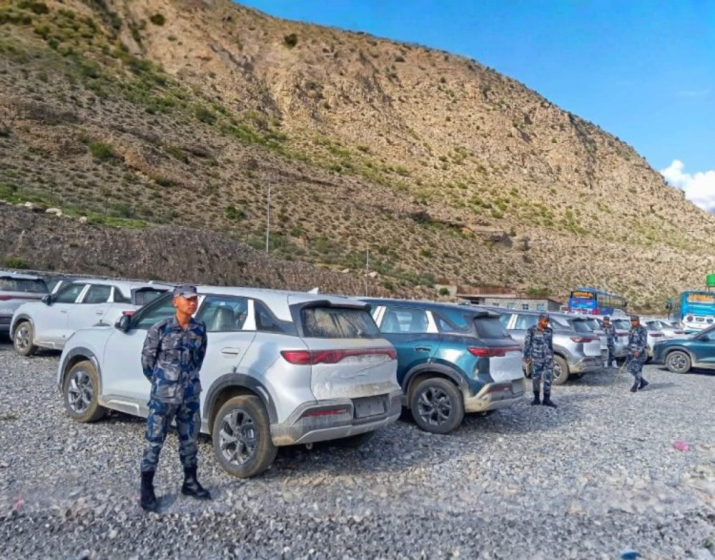
The Nepal government has moved to formally investigate one of the largest vehicle seizure cases seen in recent years, establishing a dedicated committee to examine 779 electric vehicles taken into custody on suspicion of tax evasion. The decision follows instructions issued by the Office of the Prime Minister and Council of Ministers.
For the automotive sector, the scale alone stands out. Seven hundred and seventy-nine vehicles represent a substantial volume in a market where electric mobility has become increasingly important to consumers, importers, and policymakers alike.
Officials say the objective is straightforward. Verify documentation, examine customs compliance, and determine whether state revenue regulations were breached. That sounds procedural. It is. Yet the implications reach much further.
Revenue collection remains a critical issue for government agencies, especially in sectors where import duties and customs procedures play a major role in final vehicle pricing.
The newly formed body brings together multiple government agencies, reflecting the complexity of the case. According to information released by officials, representatives have been drawn from several institutions responsible for customs enforcement, taxation, and law enforcement.
| Agency | Role In Investigation | Status |
|---|---|---|
| Ministry of Finance | Revenue and fiscal oversight | Committee member |
| Department of Customs | Customs verification | Committee member |
| Nepal Police | Law enforcement support | Committee member |
| Armed Police Force | Investigation participation | Committee member |
The structure suggests authorities want a coordinated review rather than a narrow administrative examination.
And that's important.
Cases involving vehicle imports often require cross-checking customs declarations, tax records, registration details, and supporting documentation. A multi-agency team is better positioned to connect those pieces.
Electric vehicles have become one of the defining stories in Nepal's automotive market. Consumer demand, policy incentives, and growing awareness around cleaner transportation have all contributed to stronger interest in battery-powered models.
Against that backdrop, the seizure of such a large number of EVs inevitably attracts attention.
The government's stated position is that the investigation is part of a broader commitment to good governance and protection of state revenue. Officials involved with the process have emphasized that legal proceedings must move forward based on evidence gathered during the inquiry.
Industry observers will be watching closely for several reasons:
Not everyone will notice it immediately. But investigations like this often shape how future vehicle transactions are monitored.
The committee has not wasted time. Officials say a rapid on-site investigation has already begun at locations where the vehicles were seized.
That early fieldwork is expected to form the foundation of the broader review.
| Investigation Element | Current Status | Purpose |
|---|---|---|
| Committee Formation | Completed | Launch inquiry |
| On-Site Verification | Underway | Review seized vehicles |
| Document Examination | In Progress | Verify customs and revenue records |
| Legal Review | Pending findings | Determine next steps |
According to officials, the volume of vehicles means the process may take time. Every vehicle potentially requires verification of customs and revenue documentation before conclusions can be drawn.
Here's the thing.
Large investigations rarely move at the speed the public expects. Accuracy matters more than speed when hundreds of vehicles and significant revenue questions are involved.
No timeline for the committee's final conclusions has been announced. What authorities have said is that patience will be required while documentation is reviewed and legal verification is completed.
For businesses operating within Nepal's vehicle ecosystem, the next phase could prove significant.
The automotive industry has spent years adapting to changing regulations, taxation structures, and shifting consumer demand. Electric vehicles have been at the center of much of that transformation.
Whether the investigation ultimately identifies compliance failures or clears the documentation under review, its outcome is likely to influence future conversations around transparency, customs enforcement, and vehicle imports.
For now, the focus remains on the committee's work.
The vehicles are seized. The investigators are in the field. And one of Nepal's most closely watched automotive investigations is only beginning.
Q: How many vehicles are being investigated?
A: The government committee is investigating 779 electric vehicles that were seized on suspicion of tax evasion. Officials are reviewing customs and revenue documentation linked to those vehicles.
Q: Which agencies are involved in the investigation?
A: The committee includes representatives from the Ministry of Finance, Department of Customs, Nepal Police, and the Armed Police Force.
Q: Has the investigation already started?
A: Yes. Authorities have confirmed that on-site investigations have already begun at locations where the vehicles were seized.
Q: Why were the electric vehicles seized?
A: The vehicles were seized on suspicion of tax evasion, prompting a formal government investigation into related customs and revenue documentation.
Q: When will the investigation be completed?
A: Officials have not announced a completion date. They have indicated that reviewing documentation for such a large number of vehicles may take time.
Q: Why is this case important for the automotive industry?
A: The outcome could influence future customs oversight, compliance expectations, and regulatory approaches affecting vehicle imports and the broader EV sector in Nepal.

Nepal Auto-Trader is one-stop platform for all automotive needs. We provide unbiased and unparalleled news/reviews of all auto-motives being launched in Nepalese Auto-Industry. Find recent updates and price of bikes/cars, compare and review recently launched bikes/cars, buy/sell/trade reconditioned cars/bikes and all government news about changing rules and regulation, road safety by subscribing us.

Subscribe to our Newsletter
© Copyright 2026, Nepal Autotrader



.png)
.png)