

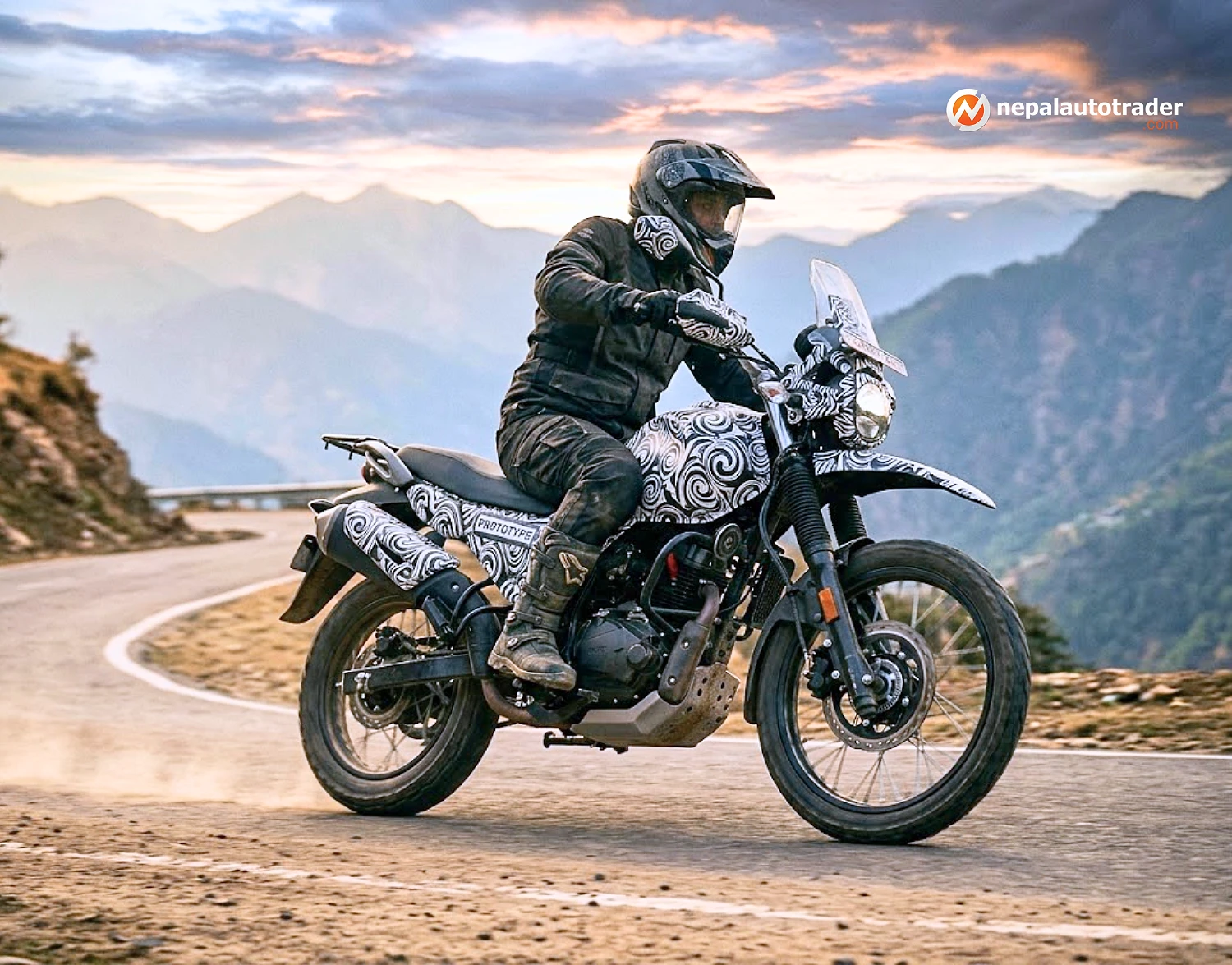
Bajaj appears to be thinking beyond a single adventure motorcycle. Rather than developing one model and asking every rider to adapt to it, the Indian manufacturer is exploring different engine capacities for its upcoming dual sport range.
The idea makes sense. Adventure motorcycles attract very different buyers, from commuters who want a tougher looking machine to experienced riders who regularly leave the tarmac behind. One engine size rarely suits everyone, particularly in markets where purchase costs, road conditions and everyday usability carry as much weight as outright performance.
The most important part of this development is not the possibility of another 250cc motorcycle. It is the suggestion that Bajaj wants to offer multiple engine capacities within its adventure motorcycle plans.
The reported possibilities range from 150cc to 250cc or more. These are indicative engine categories, not confirmed production specifications. Bajaj has not announced how many motorcycles will arrive, whether they will share a platform, or how their mechanical components will differ.
That distinction matters. A smaller motorcycle could appeal to riders who value manageable performance and daily practicality, while a larger version could attract buyers looking for stronger acceleration and greater flexibility on longer journeys. Those are potential customer benefits, not confirmed product characteristics.
The approach could also give Bajaj room to serve different international markets without relying on one specification everywhere. However, there is no confirmed market allocation or regional variant strategy yet.
Earlier spy photographs offer a clearer picture of the motorcycle's design direction than the available official information does about its engine. The test bike appears to follow a dual sport adventure design, prioritising a rugged silhouette over the road focused proportions of a conventional commuter motorcycle.
Visible details include several familiar adventure motorcycle elements.
These details suggest that Bajaj is pursuing a functional trail motorcycle rather than simply giving an existing road bike adventure themed bodywork. Still, photographs of a test prototype cannot establish its final equipment list, suspension tuning, ground clearance or off road ability.
The production version could change before launch. Until Bajaj releases official images and technical data, claims about equipment beyond the visible prototype should be treated cautiously.
For prospective buyers, the missing details are the ones that matter most. Bajaj has not disclosed the final engine capacities, power outputs, torque figures or transmission specifications for the proposed range.
| Detail | Current information |
|---|---|
| Engine options | 150cc to 250cc or more has been suggested, but not confirmed |
| Power and torque | Not officially announced |
| Transmission | Not confirmed |
| Motorcycle name | Trekker is a registered trademark, with no official model name confirmation |
| Prototype status | Prototypes have reportedly reached Brazil |
| Launch timing | A launch before the end of 2026 was previously indicated, but the schedule is unconfirmed |
| Price and availability | Not announced |
Earlier reporting has linked one anticipated version to the 249cc single cylinder engine used in the Bajaj Pulsar N250. That engine produces 24 PS and 21.5 Nm of torque in the Pulsar N250, according to earlier reporting on the upcoming adventure motorcycle. However, Bajaj has not confirmed that this engine will be used unchanged in the production ADV.
Any changes to gearing, engine tuning, cooling or output remain unknown. It would be premature to present the Pulsar's specifications as confirmed figures for the new adventure motorcycle.
Pricing is equally uncertain. No official starting price or variant wise price list has been released. Buyers should wait for an announcement rather than rely on estimates based on the Pulsar range or competing motorcycles.
The adventure segment already offers buyers several approaches to the same basic idea. Some motorcycles prioritise accessible performance and light weight, while others provide more power and equipment for touring or demanding riding.
Earlier reporting identified the Hero XPulse 210 and Kawasaki KLX230 as potential competitors in India. In Latin America, the Yamaha WR155R, Honda CRF150L and Suzuki DR150 were also mentioned as relevant rivals. These are prospective competitive comparisons, not a confirmed list of direct rivals for every Bajaj variant.
The final positioning will depend on what Bajaj actually builds. Engine size alone will not decide the outcome. Weight, suspension travel, seat height, ground clearance, tyre choice, service support and price all influence whether an adventure motorcycle works in the real world.
There is a useful lesson here for Bajaj. An adventure motorcycle does not become convincing simply because it has a beak, spoke wheels and an upright riding position. Its suspension, engine response and overall weight must work together when the road becomes broken or disappears altogether.
Nepal is a potentially interesting market for a motorcycle designed around mixed road conditions. Riders may encounter congested city streets, uneven rural roads, steep climbs and long stretches of broken pavement within the same journey. An adventure oriented motorcycle could appeal to buyers who want a versatile machine for commuting and occasional travel beyond the city.
However, the new Bajaj range has not been confirmed for Nepal. There is no official local launch date, distributor announcement, price or booking information available in the source report.
Local success would depend on more than styling. Buyers would need a sensible seat height, usable low speed power delivery, suspension suited to uneven surfaces, reliable parts availability and a price that reflects the motorcycle's actual capabilities. A smaller engine option could widen the audience, but that remains a possibility rather than a confirmed business strategy.
For now, the Trekker trademark adds an interesting clue to the story, not a final answer. Bajaj has yet to confirm whether that name will appear on the production motorcycle.
The next meaningful milestone will be an official reveal with engine specifications, model names, pricing and market availability. Until then, the most defensible conclusion is that Bajaj is developing a broader adventure motorcycle offering, with several important details still under wraps.
Q: What is Bajaj planning to launch?
A: Bajaj is developing adventure motorcycles with different engine capacities for riders with varying needs. The final number of models and their specifications have not been announced.
Q: Will the new Bajaj ADV come with a 250cc engine?
A: A 250cc class engine has been discussed in earlier reporting, including a possible connection to the Pulsar N250 engine. Bajaj has not confirmed the production motorcycle's final engine specification.
Q: What is the expected price of the Bajaj Trekker?
A: No official price has been announced. The Trekker name has been trademarked, but Bajaj has not confirmed that it will be the final name of the motorcycle.
Q: When will Bajaj launch its new adventure motorcycle?
A: Earlier reporting indicated that a launch could take place before the end of 2026. The precise date, model rollout sequence and market availability remain unconfirmed.
Q: Will the new Bajaj adventure motorcycle launch in Nepal?
A: The source report does not confirm a Nepal launch. Local pricing, bookings and availability will depend on an official announcement.
Q: Which motorcycles could compete with the new Bajaj ADV?
A: Potential rivals mentioned in earlier reporting include the Hero XPulse 210 and Kawasaki KLX230 in India, along with the Yamaha WR155R, Honda CRF150L and Suzuki DR150 in Latin America. Direct competition will depend on the final specifications and markets in which Bajaj sells each model.

Nepal Auto-Trader is one-stop platform for all automotive needs. We provide unbiased and unparalleled news/reviews of all auto-motives being launched in Nepalese Auto-Industry. Find recent updates and price of bikes/cars, compare and review recently launched bikes/cars, buy/sell/trade reconditioned cars/bikes and all government news about changing rules and regulation, road safety by subscribing us.

Subscribe to our Newsletter
© Copyright 2026, Nepal Autotrader



.png)
.png)