

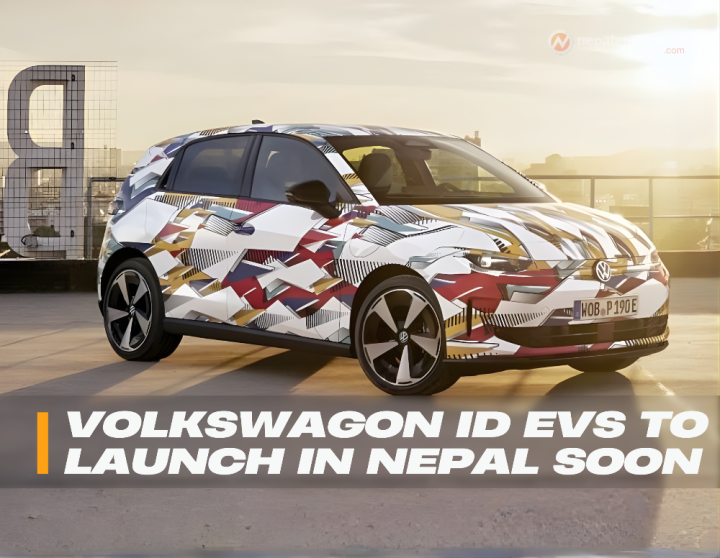
Volkswagen prepares to enter Nepal with its dedicated ID electric vehicle lineup
Focus on premium electric SUVs and hatchbacks built on the MEB platform
Designed for Nepali roads with strong range efficiency and smart safety tech
Positions Volkswagen as a serious player in Nepal’s fast-growing EV market
Volkswagen is getting ready to roll out its ID electric cars in Nepal, and this is not a token entry. This is a confident move aimed squarely at buyers who want global-grade electric vehicles with proven engineering. The ID lineup represents Volkswagen’s full commitment to electric mobility, built from the ground up rather than adapted from petrol platforms.
Nepal’s EV-friendly policies, growing charging network, and rising fuel costs have created the perfect moment for this launch. Volkswagen clearly sees long-term potential here.
The ID badge is Volkswagen’s clean slate. Every model under this name follows a simple rule. Electric first, digital by default, and efficient by design.
What defines the ID lineup
Purpose-built electric architecture
Clean and aerodynamic design language
Tech-focused interiors with minimal clutter
Strong emphasis on safety and energy efficiency
This approach has already worked well in Europe and China. Nepal is the next logical step.
Volkswagen has not officially named the model for Nepal yet, but market direction strongly suggests compact and mid-size electric vehicles that suit urban driving and highway cruising.
The Volkswagen ID 4 is the brand’s global EV bestseller, and it fits Nepal almost perfectly. It blends SUV practicality with smooth electric performance.
Why the ID 4 makes sense
Comfortable ride on mixed road conditions
Spacious cabin thanks to flat-floor EV design
Strong balance between range and performance
The ID 3 is compact, efficient, and city-friendly. It appeals to buyers who want a premium electric car without stepping into the SUV segment.
Who the ID 3 is for
Urban commuters
First-time EV buyers
Drivers who value agility and efficiency
Volkswagen’s MEB electric platform underpins the entire ID range. Batteries are mounted low in the chassis, improving stability and handling.
Key performance strengths
Instant torque for effortless hill climbs
Regenerative braking suited for downhill driving
Consistent power delivery in varying conditions
This setup works especially well for Nepal’s terrain, where elevation and traffic demand predictable performance.
Inside, the Volkswagen ID cars focus on calm and clarity. Screens replace clutter, and smart software does most of the heavy lifting.
Interior highlights
Large touchscreen with EV-optimized navigation
Fully digital driver display
Voice controls and wireless phone integration
Sustainable materials and ambient lighting
The result is a cabin that feels modern without trying too hard.
Volkswagen keeps safety practical and effective. The ID lineup is expected to arrive with a strong suite of driver assistance features that enhance confidence rather than distract.
Expected safety tech
Adaptive cruise control
Lane assist and emergency braking
Multiple airbags and reinforced structure
This strengthens Volkswagen’s appeal among family and premium EV buyers in Nepal.
Volkswagen ID electric cars support both home AC charging and public DC fast charging. Daily use stays simple, predictable, and cost-effective.
Ownership advantages
Lower running costs than fuel vehicles
Minimal maintenance requirements
Strong global brand trust and resale confidence
As Nepal’s charging infrastructure grows, ownership becomes even easier.
Volkswagen entering Nepal’s EV space raises the bar. It brings global standards of design, safety, and reliability into a market that is rapidly maturing.
This move
Signals confidence in Nepal’s electric future
Pushes competition to improve quality and tech
Gives buyers access to globally proven EV platforms
Volkswagen is not experimenting. It is committing.
The arrival of Volkswagen ID electric cars adds depth to Nepal’s EV market. Buyers get refined performance, quiet driving, and the reassurance of German engineering.
This launch is less about hype and more about direction. Electric mobility in Nepal just got more serious.

Nepal Auto-Trader is one-stop platform for all automotive needs. We provide unbiased and unparalleled news/reviews of all auto-motives being launched in Nepalese Auto-Industry. Find recent updates and price of bikes/cars, compare and review recently launched bikes/cars, buy/sell/trade reconditioned cars/bikes and all government news about changing rules and regulation, road safety by subscribing us.

Subscribe to our Newsletter
© Copyright 2026, Nepal Autotrader


.png)
.png)