

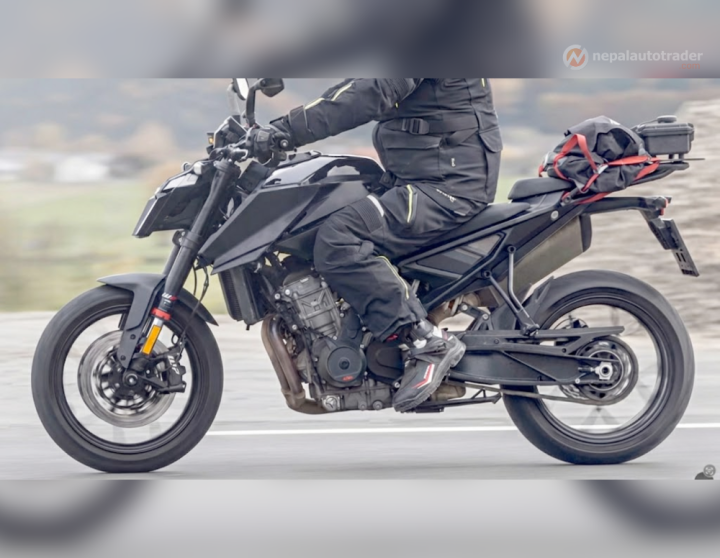
The latest batch of images, taken on a winding European road, shows a KTM 790 Duke that looks nothing like the 2022 version we have been riding. The most obvious change is the headlight cluster – a full‑width projector headlamp that sits lower and wider, echoing the aggressive bite of the 990 Duke and the flagship 1390 Super Duke R. The new light not only brightens the road, it also signals KTM’s intent to align its middle‑weight offering with the visual language of its higher‑capacity family.
The fuel tank has been reshaped, gaining a sharper taper at the rear and a subtle extension that gives the bike a longer‑wheel‑base illusion. Side panels are now more angular, and the exhaust end‑can sports a slimmer profile. All these tweaks combine into a silhouette that feels more premium, yet still unmistakably KTM.
That matters because design is the first conversation a bike has with a buyer. A sharper look can justify a higher price point and attract riders who have outgrown the 390 but aren’t ready for a 1290.
KTM’s own suspension arm, WP, is now supplying brake callipers for the 790 Duke. Until now, WP brakes were limited to the KTM 390 Duke and other sub‑500cc machines. Bringing the system in‑house serves two purposes. First, it cuts the cost of sourcing external components, a move that dovetails with KTM AG’s broader vertical‑integration strategy. Second, it gives engineers tighter control over brake feel, modulation, and weight.
The callipers are likely to be a four‑piston, steel‑backed design, mirroring the performance‑oriented units found on the 990 and 1390. Riders can expect more consistent bite at the edge of grip, especially when paired with the bike’s existing high‑flow brake discs.
This changes things for the middle‑weight market, where many competitors still rely on outsourced braking solutions. An in‑house system could become a differentiator for KTM, especially if it translates into lower warranty claims and a stronger brand narrative around engineering independence.
Beyond the headlight, the bike’s overall aesthetic leans heavily on KTM’s premium cues:
These changes are not cosmetic only; they improve airflow to the engine and aid cooling, a subtle benefit that engineers love but riders rarely notice until they feel the difference on a hot day.
That matters because a bike that looks fast often feels fast. The visual aggression can boost rider confidence before the first twist of the throttle.
While the exterior gets a makeover, the heart of the machine appears unchanged. The current‑gen KTM 790 Duke houses a 799 cc liquid‑cooled parallel‑twin that produces 105 bhp at 10,250 rpm and 87 Nm of torque at 9,500 rpm. The new model is expected to retain this powerplant, at least for the initial launch.
Retaining the proven engine lets KTM focus development resources on chassis and electronics, where the market is moving fastest. It also means existing owners will find parts and service familiar, an advantage in markets where KTM’s dealer network is still growing.
KTM has not announced a launch date, but the spy shots suggest the bike is close to production readiness. Europe appears to be the primary test market – the images were taken on a road that matches the Austrian‑German border region where KTM often conducts validation.
The big question is India. KTM’s 790 has been a strong seller in the Indian market, yet the brand has not confirmed whether this refreshed version will make the cut. If the WP brake callipers help keep the price competitive, we could see a launch there within the next six months. If not, KTM may use the model as a European‑only halo bike, feeding the premium‑bike appetite in the EU while keeping the older spec for emerging markets.
Either way, the move signals KTM’s confidence that a more premium‑styled middle‑weight can command a higher price without alienating its core audience. It also shows the company is serious about owning more of its component stack, a trend that could reshape the competitive landscape for other manufacturers.
That changes things for anyone watching the middle‑weight segment. A more integrated KTM could force rivals to re‑evaluate their own supply chains, especially around braking technology.
| Specification | Current‑Gen 790 Duke | Next‑Gen 790 Duke (expected) |
|---|---|---|
| Engine | 799 cc liquid‑cooled parallel‑twin | 799 cc liquid‑cooled parallel‑twin |
| Power | 105 bhp @ 10,250 rpm | 105 bhp @ 10,250 rpm |
| Torque | 87 Nm @ 9,500 rpm | 87 Nm @ 9,500 rpm |
| Brakes | Standard OEM callipers | In‑house **WP brake callipers** (four‑piston) |
| Headlight | LED single unit | **Projector headlamp** with wider spread |
Q: When will the new KTM 790 Duke be launched in Europe? A: KTM has not set an official date, but the latest spy shots suggest a launch could happen in the second half of 2024, likely around September or October.
Q: Will the bike be available in India? A: KTM has not confirmed Indian availability. Market speculation points to a possible launch within six months if pricing remains competitive.
Q: What are the main visual differences from the current model? A: The next‑gen version features a projector headlamp, a sharper fuel‑tank silhouette, revised side panels, and a slimmer exhaust end‑can.
Q: Are the engine performance figures changing? A: All available information indicates the 799 cc engine will stay at 105 bhp and 87 Nm, identical to the current‑gen model.
Q: How will the in‑house WP brake callipers affect riding feel? A: Expect more consistent bite and better modulation, especially under hard braking, due to the four‑piston design and tighter integration with KTM’s chassis tuning.
Q: Which competitors will the refreshed 790 Duke face? A: Primary rivals include the Yamaha MT‑07, Kawasaki Z650, and the Honda CB650R, all of which offer similar displacement but differ in styling and braking technology.

Nepal Auto-Trader is one-stop platform for all automotive needs. We provide unbiased and unparalleled news/reviews of all auto-motives being launched in Nepalese Auto-Industry. Find recent updates and price of bikes/cars, compare and review recently launched bikes/cars, buy/sell/trade reconditioned cars/bikes and all government news about changing rules and regulation, road safety by subscribing us.

Subscribe to our Newsletter
© Copyright 2026, Nepal Autotrader



.png)
.png)