

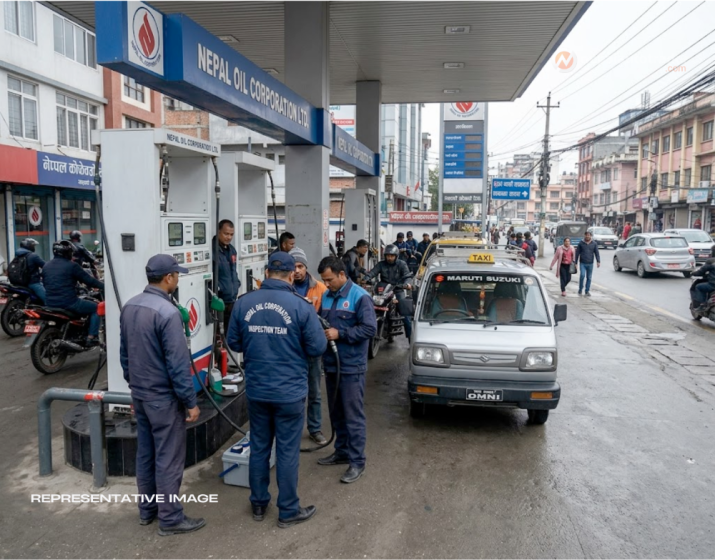
Nepal Oil Corporation, widely known as NOC, has issued a fresh operational directive to its authorized petroleum sellers nationwide, pushing fuel stations to improve safety, customer facilities and overall infrastructure standards within seven days. The move was announced through an official notice released by the state-owned fuel supply body.
This is not a routine advisory. The corporation has clearly stated that inspections can take place at any time and any shortcomings discovered during monitoring by NOC or other authorized agencies could trigger action under the Petroleum Seller Regulation 2075, including amended provisions. That matters.
The directive arrives at a time when Nepal’s fuel retail network is under increasing scrutiny over service quality, safety compliance and station management practices. Petrol pumps are no longer judged only by fuel availability. Customers now expect cleaner stations, transparent pricing and safer environments.
For Nepal’s fuel retail operators, the message is direct, compliance can no longer be delayed.
According to the notice, petroleum dealers have been instructed to immediately improve operational standards at sales points. The corporation wants stations to ensure that consumers receive petroleum products in a safe, clean and reliable environment.
The directive outlines several mandatory actions that dealers must complete within the seven-day window.
| Requirement | NOC Instruction |
|---|---|
| Fuel Quality | Ensure purity and quality standards for petroleum products at sales points. |
| Fire Safety | Maintain proper earthing systems and keep fire safety equipment ready. |
| Tank Truck Unloading | Stop fuel sales during unloading operations and carry out unloading safely. |
| Public Facilities | Provide clean drinking water and free toilets for customers. |
| Price Transparency | Display retail fuel prices clearly for public visibility. |
| Drainage System | Develop surface drainage for rainwater management. |
| Infrastructure | Maintain canopies, lighting and structural cleanliness. |
The inclusion of customer-focused facilities stands out here. Fuel stations in Nepal have historically prioritized fuel dispensing over customer convenience. NOC now wants that balance corrected.
Clean drinking water, free toilets and proper lighting sound basic. In reality, many stations still struggle to maintain these services consistently. This changes things.
A major portion of the directive centers on reducing fire risks at petroleum sales points. Fuel stations operate in high-risk environments, especially during tanker unloading and fuel transfer operations. NOC has specifically instructed dealers to install proper earthing systems and keep firefighting equipment prepared at all times.
The corporation has also ordered stations to suspend petroleum sales during tank truck unloading operations. This requirement is aimed at minimizing ignition risks and improving operational control inside station premises.
The infrastructure-related instructions are equally detailed. Dealers have been told to:
These requirements point to a broader effort to standardize Nepal’s petroleum retail environment. NOC appears determined to push stations toward a cleaner and more organized appearance, particularly in urban areas where fuel stations operate under growing public visibility.
The focus is not just technical. It is also about public confidence.
One of the most important aspects of the new directive is the mandatory display of petroleum prices at retail stations. NOC has instructed dealers to place fuel price lists where ordinary consumers can easily see them.
Transparent pricing has become a recurring concern in Nepal’s fuel market, especially during periods of price adjustments and supply fluctuations. By enforcing visible retail pricing, the corporation is trying to reduce confusion and strengthen accountability at the pump.
| Consumer Service Area | Expected Improvement | Impact On Users |
|---|---|---|
| Visible Fuel Pricing | Clear display boards | Improves transparency |
| Free Toilets | Mandatory customer access | Better travel convenience |
| Drinking Water | Clean water availability | Enhanced customer support |
| Clean Premises | Improved hygiene standards | Safer station environment |
The move also reflects changing expectations from Nepal’s growing vehicle population. Fuel stations are increasingly seen as part of the broader mobility ecosystem, not just fuel dispensing points.
That wider transformation is already visible in discussions around charging stations at petrol pumps and the expansion of modern fuel infrastructure. NOC’s latest directive fits directly into that shift.
NOC has not left room for ambiguity in its warning. The corporation stated that if inspections uncover deficiencies after the seven-day compliance period, dealers could face action under existing petroleum seller regulations.
The official notice specifically references the Petroleum Seller Regulation 2075, including amendments. While the corporation did not detail exact penalties in the notice, the language signals stricter enforcement moving forward.
This tougher stance comes as Nepal’s automotive and transport sectors continue evolving rapidly. Rising vehicle numbers, growing intercity traffic and expanding infrastructure projects are putting more pressure on fuel retail operations.
Related developments in Nepal’s transport and automotive sectors have already highlighted similar concerns around operational transparency and infrastructure modernization. Reports linked to Hyundai vehicle production in Nepal, the latest auto sector budget discussions and Chinese automotive market expansion all point toward a market that is becoming more competitive and more demanding.
Fuel retailers now sit inside that same transformation cycle.
For many independent station operators, the next seven days could determine how aggressively NOC intends to enforce these standards in the future. And once enforcement begins, expectations rarely move backward.
Q: What is the main purpose of NOC’s new 11-point directive?
A: The directive is aimed at improving fuel station safety, customer service, infrastructure standards and operational management across Nepal. NOC also wants better compliance with fire safety and transparency requirements.
Q: How much time have petroleum sellers been given to comply?
A: Nepal Oil Corporation has provided a seven-day deadline for authorized petroleum dealers to implement the required improvements and operational standards.
Q: What facilities must fuel stations now provide to customers?
A: Fuel stations must arrange clean drinking water, free toilets, proper lighting and visible retail fuel price boards for customers.
Q: What happens if dealers fail to comply with the directive?
A: NOC has warned that action can be taken under the Petroleum Seller Regulation 2075, including amended provisions, if inspections identify shortcomings.
Q: Why must fuel sales stop during tank truck unloading?
A: NOC wants stations to halt fuel dispensing during unloading to reduce fire risks and improve safety during petroleum transfer operations.
Q: Does the directive apply only to Kathmandu?
A: No. The directive applies to authorized petroleum sellers across the country, according to the notice issued by Nepal Oil Corporation.

Nepal Auto-Trader is one-stop platform for all automotive needs. We provide unbiased and unparalleled news/reviews of all auto-motives being launched in Nepalese Auto-Industry. Find recent updates and price of bikes/cars, compare and review recently launched bikes/cars, buy/sell/trade reconditioned cars/bikes and all government news about changing rules and regulation, road safety by subscribing us.

Subscribe to our Newsletter
© Copyright 2026, Nepal Autotrader



.png)
.png)