

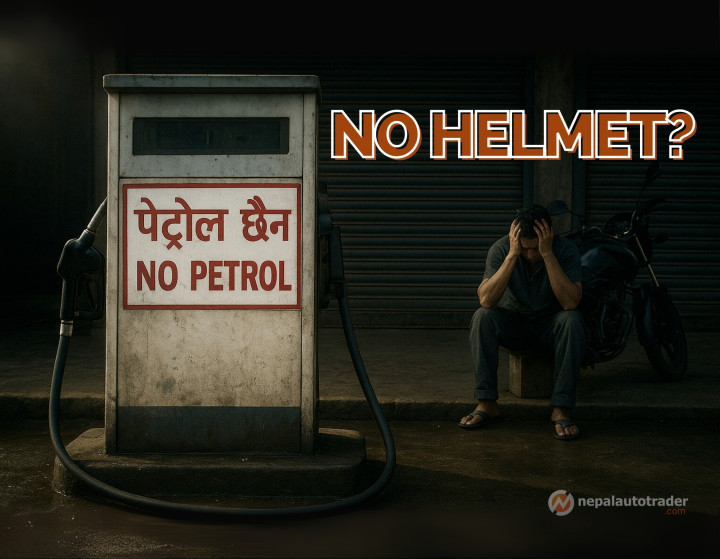
The “No Helmet, No Petrol” campaign in Nepal marks a decisive move by authorities to improve road safety. By linking access to fuel with mandatory helmet use, the government aims to curb reckless riding and reduce fatalities caused by two-wheeler accidents, which remain the leading cause of road deaths in the country.
Nepal has witnessed alarming rates of motorcycle-related accidents. A significant number of these tragedies involve riders not wearing helmets. Despite awareness campaigns, many motorcyclists continue to neglect basic safety practices. The new petrol distribution rule serves as a direct intervention, compelling compliance through everyday necessity.
Over 35% of road accidents in Nepal involve two-wheelers.
Head injuries account for the majority of fatalities among motorcyclists.
Proper helmet usage can reduce the risk of fatal injury by up to 40%.
The Ministry of Home Affairs, in coordination with local authorities and traffic police, has instructed all fuel stations to deny petrol sales to riders without helmets. Pump attendants are being trained to enforce this regulation fairly and consistently.
The policy has received mixed responses:
Supporters argue that it will save lives and reinforce traffic discipline.
Critics raise concerns about inconvenience, enforcement gaps, and the burden on fuel station staff.
Despite the pushback, early implementation in certain districts shows promising results, with more riders seen wearing helmets consistently.
The campaign is supported under existing traffic laws in Nepal, which mandate helmet use. Failure to comply may result not only in fuel denial but also fines and license penalties during traffic checks. By synchronizing fuel restrictions with traffic enforcement, authorities create a dual-layered deterrent.
Similar policies have been tested in India and Sri Lanka, where they demonstrated measurable improvements in road safety. Nepal’s adoption of this model highlights its commitment to replicating international best practices tailored to local conditions.
The “No Helmet, No Petrol” initiative is part of a broader vision to transform road safety culture in Nepal. Future strategies include:
Stricter vehicle fitness checks to prevent accidents caused by faulty motorcycles.
Awareness campaigns targeting young riders and students.
Digital monitoring systems to track compliance at petrol stations.
The No Helmet, No Petrol rule is more than just a restriction—it is a life-saving intervention. By combining necessity with safety, Nepal is steering towards a future where helmets become an inseparable part of riding culture. Compliance with this rule not only ensures access to fuel but also protects lives on the road.

Nepal Auto-Trader is one-stop platform for all automotive needs. We provide unbiased and unparalleled news/reviews of all auto-motives being launched in Nepalese Auto-Industry. Find recent updates and price of bikes/cars, compare and review recently launched bikes/cars, buy/sell/trade reconditioned cars/bikes and all government news about changing rules and regulation, road safety by subscribing us.

Subscribe to our Newsletter
© Copyright 2026, Nepal Autotrader



.png)
.png)