

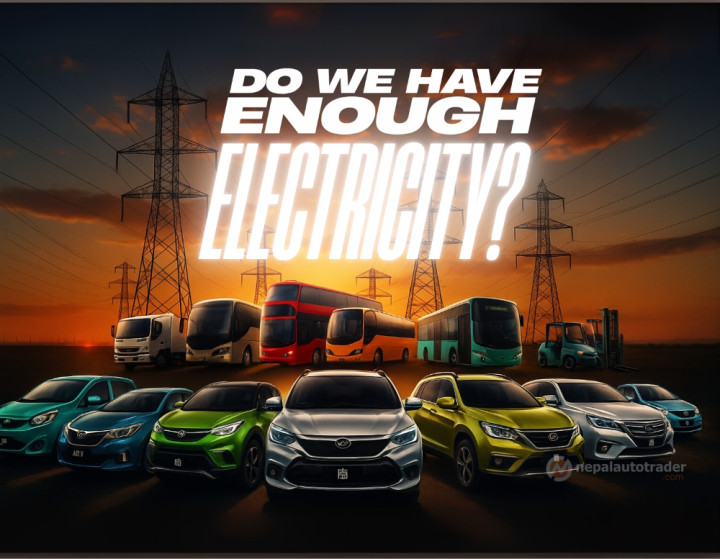
Nepal's EVs now consume 550,000+ kWh electricity daily
Over 1,511 EV charging stations active nationwide
35,000+ electric vehicles currently on Nepali roads
Daily savings of NPR 25.8 million in fuel costs
Charging infrastructure grew by 311 stations in one year
Untracked home charging adds more hidden load on grid
Nepal is fast shifting gears. There are now over 35,000 electric vehicles in operation, ranging from compact EVs to public transport buses. EVs are no longer a niche—they’re part of everyday traffic, from Kathmandu’s city roads to highways in the Terai.
According to Nepal Electricity Authority (NEA), dedicated EV charging stations across the country are now using more than 550,000 kilowatt-hours (kWh) of electricity daily.
That’s just from official stations. Many private owners charge their EVs at home, which isn’t tracked—making total consumption much higher.
NEA Assistant Manager Sagar Mani Gyawali confirms the bulk of demand is coming from CCS2 and GBT-type public chargers, but says home usage is likely rising fast.
While public stations are monitored, residential charging is off the radar.
Many EV owners charge overnight at home using standard sockets or private setups. This growing trend creates a “silent load” on the national grid that must be factored into energy planning.
As of mid-July 2025 (Ashar 32, 2082 BS), Nepal has 1,511 officially completed EV charging stations, a major leap from just over 1,200 a year ago.
| Fiscal Year | Total Stations |
|---|---|
| 2080/81 BS | ~1,200 |
| 2081/82 BS | 1,511 |
| Under Construction | 100+ |
This marks a 311-station increase in a single fiscal year, a clear sign that infrastructure is catching up with rising EV ownership.
Nepal’s shift to EVs is already saving big on fuel imports. Based on NEA calculations:
Fuel replaced daily: ~169,000 litres
Petrol price (avg): NPR 165/litre
Diesel price (avg): NPR 149/litre
Estimated daily savings: NPR 2,58,00,000
Annual savings: ~NPR 9,40,00,00,000
That’s money staying in Nepal, instead of flowing out for fossil fuel imports.
Cleaner air in cities with fewer tailpipe emissions
Reduced fossil fuel dependency, strengthening energy security
Higher load factor for hydropower, especially at night
More efficient use of national grid capacity
But this also means Nepal must scale smartly—ensuring that generation, transmission, and policy keep up with the EV surge.
With more EVs hitting the road each month and charging stations expanding fast, electricity consumption will continue to climb. Smart planning is now urgent:
Expand grid capacity near EV hubs
Introduce time-of-day charging tariffs
Build fast-charging corridors for intercity travel
Nepal’s EV ecosystem is growing at speed—electricity demand is surging, infrastructure is scaling, and fuel bills are dropping. But this rapid shift demands smart policies, targeted investment, and public awareness.
The next step? Anticipate, adapt, and power ahead.

Nepal Auto-Trader is one-stop platform for all automotive needs. We provide unbiased and unparalleled news/reviews of all auto-motives being launched in Nepalese Auto-Industry. Find recent updates and price of bikes/cars, compare and review recently launched bikes/cars, buy/sell/trade reconditioned cars/bikes and all government news about changing rules and regulation, road safety by subscribing us.

Subscribe to our Newsletter
© Copyright 2026, Nepal Autotrader



.png)
.png)