

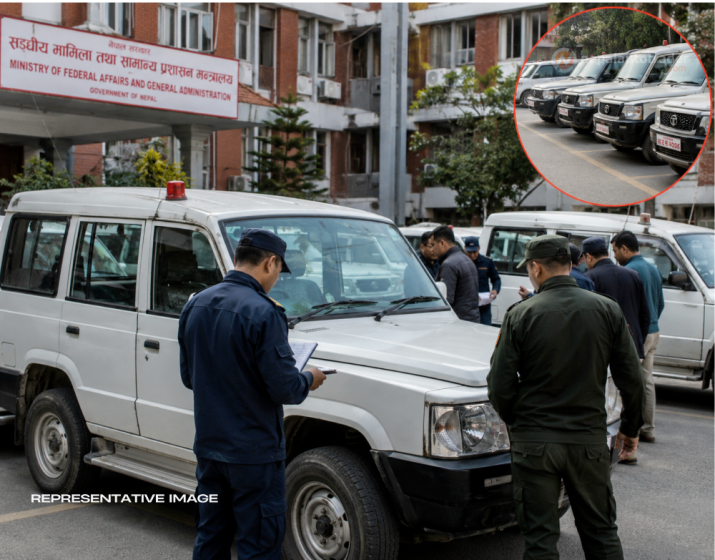
The Government of Nepal has taken a decisive step to rein in misuse of state resources, recalling 622 official vehicles from individuals found to be using them without authorization. The move comes as part of a broader administrative push to tighten control over government assets, particularly those routinely diverted for personal or unofficial purposes.
This is not a small correction. It is a signal. A signal that long tolerated practices are now under scrutiny, and enforcement is no longer optional. That matters.
Authorities confirmed that the recalled vehicles were being used outside official mandates, often by individuals who no longer held positions or had no entitlement in the first place. The scale of the recall suggests systemic gaps in oversight, not isolated misuse.
The misuse of official vehicles has been a persistent issue across ministries, departments, and public institutions. Vehicles allocated for administrative duties frequently end up serving personal errands, political interests, or unofficial engagements.
Key problem areas identified include:
The recall of 622 vehicles exposes how deeply embedded the issue has become. It also highlights a gap between policy and practice. This changes things.
In response, the government has begun enforcing stricter compliance measures. Ministries and departments have been instructed to ensure that vehicles are used strictly within official guidelines, with clear accountability assigned to department heads.
| Measure | Details | Impact |
|---|---|---|
| Vehicle Recall | 622 units retrieved from unauthorized users | Immediate reduction in misuse |
| Monitoring Reinforcement | Stricter tracking of vehicle allocation | Improved oversight |
| Administrative Accountability | Responsibility placed on officials | Higher compliance pressure |
The directive is clear, misuse will not be tolerated. Departments are expected to maintain updated records and justify vehicle allocation at all times. That level of scrutiny was missing before.
Official vehicles are not just logistical tools, they represent public expenditure. Fuel, maintenance, and operational costs accumulate quickly when vehicles are misused. The financial implications are significant, even if exact figures were not disclosed.
The crackdown is about more than numbers. It is about restoring trust.
Key implications include:
For a system often criticized for inefficiency, this move positions the government as proactive. It is a shift in tone, and tone matters.
Recalling 622 vehicles is a strong start, but the real test lies in sustained enforcement. Without continuous monitoring, the system risks reverting to old habits.
The government is expected to:
The direction is clear, but execution will define the outcome. This is where reforms either hold or collapse.
There is also a broader administrative context. The move aligns with ongoing efforts to streamline government operations and reduce inefficiencies. It is part of a larger narrative, one that aims to modernize governance structures.
The recall of official vehicles is not an isolated action. It reflects increasing pressure on public institutions to demonstrate accountability and efficiency. Citizens expect more, and tolerance for misuse is shrinking.
This development sits alongside other reforms aimed at improving transparency and resource management. It suggests a shift toward tighter administrative discipline.
And yet, the question remains, will this momentum sustain?
For now, the message is unmistakable. Misuse of state resources is under watch. Enforcement has begun. That alone marks a turning point.
Q: How many official vehicles were recalled by the government?
A: The government recalled 622 official vehicles that were being used by unauthorized individuals. This is one of the largest corrective actions in recent administrative enforcement.
Q: Why were these vehicles recalled?
A: The vehicles were found to be used without proper authorization, often for personal or unofficial purposes, violating government regulations.
Q: Which authority initiated this crackdown?
A: The action was initiated by the Government of Nepal as part of a broader effort to enforce accountability and proper use of state resources.
Q: Will there be further monitoring of official vehicles?
A: Yes, the government has indicated stricter monitoring and compliance mechanisms will be implemented to prevent future misuse.
Q: What impact will this have on government operations?
A: The move is expected to improve efficiency, reduce unnecessary costs, and strengthen accountability across ministries and departments.
Q: Is this part of a larger reform initiative?
A: Yes, the crackdown aligns with broader administrative reforms aimed at improving governance, transparency, and resource management.

Nepal Auto-Trader is one-stop platform for all automotive needs. We provide unbiased and unparalleled news/reviews of all auto-motives being launched in Nepalese Auto-Industry. Find recent updates and price of bikes/cars, compare and review recently launched bikes/cars, buy/sell/trade reconditioned cars/bikes and all government news about changing rules and regulation, road safety by subscribing us.

Subscribe to our Newsletter
© Copyright 2026, Nepal Autotrader



.png)
.png)