

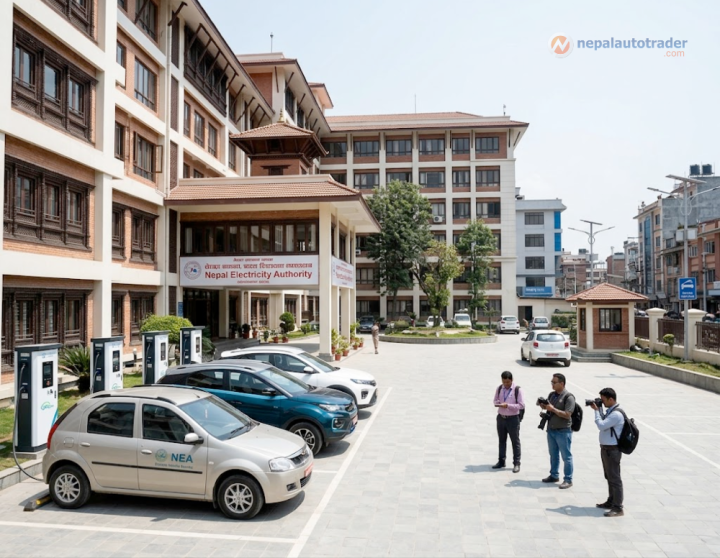
The Government of Nepal has issued a clear directive, use more electric vehicles. It sounds simple. It is not. This is a signal, not just a suggestion.
The move comes as the country continues to battle rising fuel import costs and increasing environmental pressure. EVs sit right at the intersection of both problems. Cleaner streets, lower dependency on imported fossil fuels. That matters.
This is not the first time policymakers have leaned toward electrification. But the tone has shifted. There is urgency now. A sense that transition cannot wait for market forces alone.
And when governments change tone, industries listen.
The reasoning is layered, but the core drivers are clear. Nepal’s energy mix already favors electricity, particularly hydropower. Using that domestic advantage for mobility is logical. Almost inevitable.
Key motivations behind the push include:
The shift is not just environmental. It is economic. Every liter of fuel replaced by electricity keeps money inside the country. That changes the equation.
This changes things.
Government calls like this rarely stay theoretical. They ripple outward, often fast. The first sectors likely to feel the pressure are predictable.
| Sector | Expected Impact | Reason |
|---|---|---|
| Public Transport | Acceleration toward EV buses | High fuel consumption, visible emissions |
| Private Vehicles | Increased EV adoption | Growing affordability and awareness |
| Government Fleets | Transition mandates likely | Policy leadership role |
| Commercial Mobility | Fleet electrification pressure | Cost savings over time |
Public transport stands out. High visibility. High impact. A shift here sends a message no policy document can match.
Private buyers will follow, but only if infrastructure and pricing align. That balance remains delicate.
You cannot push EV adoption without addressing charging. It is the first question every buyer asks. And the hardest to answer convincingly.
While Nepal has made progress, gaps remain:
Without solving these, policy risks outrunning reality. Consumers hesitate when convenience is uncertain. Always.
Still, momentum helps. Policy pressure often accelerates infrastructure investment. Investors watch these signals closely.
That matters.
For automakers and importers, this is a green light. Not subtle. Direct.
Brands already active in Nepal’s EV space stand to benefit immediately. Increased visibility, stronger demand signals, and potential policy incentives. It creates a favorable environment for expansion.
Expect movement in:
The competitive landscape will tighten. Fast.
Momentum builds in layers. Policy is just one layer, but it is often the one that tips the scale.
A call to action is only the beginning. Execution defines success.
The next phase will likely revolve around coordination:
| Area | Next Step | Stakeholders |
|---|---|---|
| Policy | Implementation guidelines | Government agencies |
| Infrastructure | Charging network expansion | Private sector, utilities |
| Market | EV adoption incentives | Importers, consumers |
| Awareness | Public education campaigns | Media, institutions |
Consumers will watch closely. They always do. If convenience improves and costs stabilize, adoption will follow naturally.
And if it does not, policy alone will not carry the weight.
This is the inflection point. Not the finish line.
Q: Will this lead to mandatory EV adoption?
A: The announcement signals strong encouragement, not an immediate mandate. However, certain sectors like government fleets may see stricter requirements over time.
Q: How does this impact EV buyers in Nepal?
A: Buyers may benefit from increased availability, better infrastructure, and potential policy support. Market competition could also improve pricing and options.
Q: Is charging infrastructure ready for mass EV adoption?
A: Infrastructure is improving but still developing. Expansion of charging networks will be critical for widespread adoption.
Q: Which sectors will shift to EVs first?
A: Public transport, government fleets, and commercial mobility are expected to transition faster due to higher fuel usage and policy visibility.
Q: Why is Nepal focusing on electric vehicles now?
A: The push is driven by the need to reduce fuel imports, cut emissions, and better utilize domestic electricity resources."

Nepal Auto-Trader is one-stop platform for all automotive needs. We provide unbiased and unparalleled news/reviews of all auto-motives being launched in Nepalese Auto-Industry. Find recent updates and price of bikes/cars, compare and review recently launched bikes/cars, buy/sell/trade reconditioned cars/bikes and all government news about changing rules and regulation, road safety by subscribing us.

Subscribe to our Newsletter
© Copyright 2026, Nepal Autotrader



.png)
.png)