

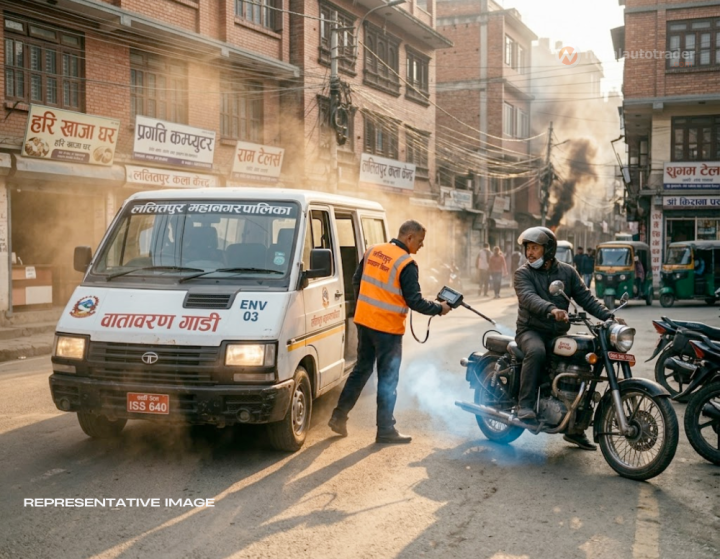
Lalitpur Metropolitan City deploys an Environment Van to strengthen pollution control
Mobile enforcement targets open burning, vehicle emissions, and illegal waste practices
Supports Nepal’s growing shift toward clean mobility and electric vehicle adoption
Enhances the role of environment police with real-time monitoring capability
Aligns with broader plans to introduce electric waste management vehicles
Positions Lalitpur as a leading model for sustainable urban governance in Nepal
Lalitpur Metropolitan City has introduced an Environment Van to tackle one of its biggest urban challenges. Pollution control in rapidly growing cities often suffers from slow enforcement and limited reach. This new mobile unit changes that.
Instead of waiting for violations to be reported, authorities can now actively patrol streets, identify issues, and take immediate action. It is a small move with big implications for how cities manage air quality and environmental compliance.
Nepal’s electric vehicle market is evolving fast. Most headlines focus on passenger EVs, battery range, and affordability. But there is another shift happening quietly in the background.
Cities are starting to adopt electric and utility vehicles for governance and public service.
Key trends shaping this shift
Growing demand for electric vans in urban transport
Municipal adoption of EVs for waste management and inspection
Rising awareness around air pollution and emission control
Push toward smart city infrastructure
Lalitpur’s Environment Van fits neatly into this trend. It expands the idea of clean mobility beyond private ownership into public service.
This is not just a vehicle. It is a mobile enforcement unit designed to improve environmental discipline across the city.
Monitor vehicle emissions on the road
Identify and stop open burning and plastic incineration
Enforce rules against littering and illegal waste disposal
Control noise and industrial pollution in urban zones
Remove unauthorized posters and visual clutter
Faster response time compared to fixed inspection systems
Increased visibility creates a deterrent effect
Enables real-time enforcement instead of delayed action
| Category | Details |
|---|---|
| Vehicle type | Environment monitoring van |
| Primary role | Mobile enforcement and inspection |
| Users | Environment police and municipal authorities |
| Key capability | Real-time pollution monitoring |
| Deployment area | Urban zones across Lalitpur |
While technical specs like battery size or range are not publicly detailed, the focus is clearly on utility rather than performance.
The Environment Van introduces a new category in Nepal’s EV landscape. It blends mobility with governance.
Why it matters
Improves air quality through stricter enforcement
Reduces environmental violations at the source
Builds a culture of accountability among citizens
Strengthens Lalitpur’s image as a clean and organized city
For residents, the impact is simple and tangible. Cleaner streets, better air, and a more livable city.
| Aspect | Environment Van | Traditional enforcement | Commercial EV vans |
|---|---|---|---|
| Purpose | Environmental monitoring | Manual inspection | Transport and logistics |
| Mobility | High | Low | High |
| Efficiency | Immediate action | Delayed response | Not applicable |
| Sustainability | High | Low | High |
| Role | Governance tool | Legacy system | Commercial use |
The key difference is intent. This van is not built to move people or goods. It is built to enforce rules and improve urban life.
Nepal is already seeing growth in electric vans for both passenger and cargo use. These vehicles typically offer
Seating capacity from 10 to 19 passengers
Battery ranges suitable for daily urban commutes
Lower operating costs compared to fuel vehicles
Lalitpur’s move complements this ecosystem. It shows that EV adoption is not limited to private buyers or businesses. Governments are now part of the transition.
The Environment Van is a practical step toward smarter urban management. It does not rely on complex systems or futuristic tech. It focuses on execution.
What comes next
Expansion of EV-based municipal fleets
More cities adopting mobile enforcement vehicles
Integration with digital monitoring and smart city systems
Lalitpur is quietly setting a benchmark. Clean mobility is no longer just about owning an electric car. It is about how cities use mobility to enforce sustainability.

Nepal Auto-Trader is one-stop platform for all automotive needs. We provide unbiased and unparalleled news/reviews of all auto-motives being launched in Nepalese Auto-Industry. Find recent updates and price of bikes/cars, compare and review recently launched bikes/cars, buy/sell/trade reconditioned cars/bikes and all government news about changing rules and regulation, road safety by subscribing us.

Subscribe to our Newsletter
© Copyright 2026, Nepal Autotrader



.png)
.png)