

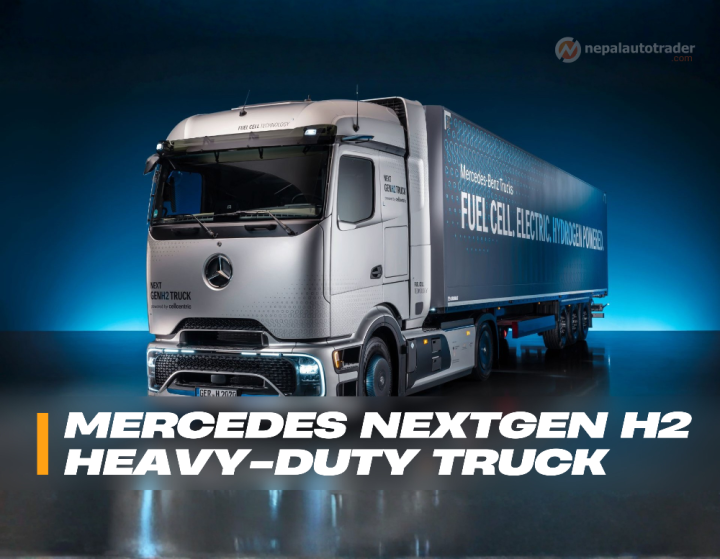
Mercedes‑Benz has taken a bold step away from electric batteries and into the realm of hydrogen fuel cell power. The NextGen H2 is a purpose‑built heavy‑duty tractor designed for long‑distance freight corridors. Its sleek cab sits atop a robust chassis that can handle the rigors of European highways and mountain passes alike. The announcement comes at a time when regulators are tightening CO₂ limits, and shippers are hunting for truly clean alternatives.
The truck’s architecture is built around two fuel‑cell stacks. Together they generate between 402 hp and 496 hp, enough to haul full loads up steep grades without breaking a sweat. That matters because many electric trucks still struggle with payload capacity on demanding routes. The power is delivered through an electric motor, but the source is pure hydrogen, not a large battery pack.
Range anxiety has haunted electric haulers for years. Mercedes‑Benz tackles that head‑on by storing liquid hydrogen at ‑423°F in insulated tanks. The cryogenic storage method packs more energy per litre than compressed gas, meaning the truck can cover roughly 1,000 km on a single fill. That distance mirrors the typical daily mileage of many long‑haul fleets.
Refuelling is startlingly quick. A dedicated hydrogen station can top the tanks in 10‑15 minutes, comparable to a diesel pump stop. No need to wait hours for a battery to charge. The system also includes a 101 kWh battery that stores excess energy generated by the fuel cells, smoothing out power delivery during acceleration and when climbing hills.
The combination of high‑energy‑density fuel and rapid refuelling reshapes the economics of zero‑emission freight. Operators can keep trucks on the road longer, reducing idle time and increasing asset utilisation. This changes things for anyone watching the bottom line.
Zero‑emission power is only part of the story. Mercedes‑Benz equips the NextGen H2 with a suite of advanced driver‑assist features. Active brake assist monitors the road ahead and can intervene to prevent a collision. Active side guard assist watches blind‑spot zones and alerts the driver to potential hazards.
Hydrogen safety is taken seriously. The vehicle integrates leak‑detection sensors that instantly flag any loss of hydrogen, triggering alarms and automatic shutdown of the fuel‑cell system. The cab also benefits from the latest infotainment and telematics, giving fleet managers real‑time data on fuel consumption, location, and system health.
These technologies reinforce the truck’s claim of being a safe, reliable workhorse for the modern supply chain. Safety, after all, is a non‑negotiable factor for fleet owners.
Mercedes‑Benz plans to break ground on the first batch of 100 NextGen H2 units at its Wörth manufacturing hub by the close of 2026. The German government has pledged roughly $244 million in financial support, underscoring the strategic importance of hydrogen as a decarbonisation tool.
From 2026 onward, the company aims to scale production, targeting a significant volume by 2030. The goal is to make hydrogen trucks a viable alternative to diesel and battery‑electric rigs on long hauls across Europe and, eventually, other markets.
Competitors such as Toyota and Nikola have already fielded hydrogen trucks, but the NextGen H2 distinguishes itself with higher power output, a larger onboard battery, and a faster refuelling cycle. For operators, the promise of a familiar driving experience combined with zero tailpipe emissions could tip the scales.
Hydrogen offers a unique answer to the challenges that electric batteries cannot fully solve in the heavy‑duty segment. Batteries add significant weight, reducing payload capacity, and charging infrastructure remains sparse along many freight corridors. Liquid hydrogen, stored at cryogenic temperatures, delivers more energy per kilogram, keeping the truck light while extending range.
The NextGen H2 embodies that philosophy. By marrying fuel‑cell efficiency with rapid refuelling, Mercedes‑Benz creates a platform that can operate 24/7 without the downtime associated with battery charging. This matters for logistics firms that need to meet tight delivery windows while complying with ever‑stricter emissions regulations.
Looking ahead, the success of the NextGen H2 could accelerate the rollout of hydrogen refuelling networks, making the technology more accessible to a broader range of carriers. The ripple effect would be a cleaner, more resilient freight ecosystem.
Q: What is the expected price of the NextGen H2 truck? A: Mercedes‑Benz has not disclosed a final price, but the vehicle is positioned as a premium, zero‑emission solution for long‑haul operators, with pricing expected to reflect the cost of fuel‑cell technology and government incentives.
Q: When will the NextGen H2 be available in Nepal? A: Initial production is scheduled for the Wörth plant in Germany by the end of 2026. Export timelines to Asian markets, including Nepal, will depend on local hydrogen infrastructure development and regulatory approvals.
Q: How does the power output compare to diesel trucks? A: The twin fuel‑cell units deliver between 402 hp and 496 hp, which is comparable to many mid‑range diesel tractors, while offering instant torque and zero tailpipe emissions.
Q: What are the refuelling requirements for liquid hydrogen? A: The truck uses cryogenic tanks that hold liquid hydrogen at ‑423°F. Refuelling takes 10‑15 minutes at a certified hydrogen station equipped for liquid dispensing.
Q: Does the truck include any battery storage? A: Yes, a 101 kWh battery is integrated to capture excess energy and assist during high‑load situations, improving overall efficiency.

Nepal Auto-Trader is one-stop platform for all automotive needs. We provide unbiased and unparalleled news/reviews of all auto-motives being launched in Nepalese Auto-Industry. Find recent updates and price of bikes/cars, compare and review recently launched bikes/cars, buy/sell/trade reconditioned cars/bikes and all government news about changing rules and regulation, road safety by subscribing us.

Subscribe to our Newsletter
© Copyright 2026, Nepal Autotrader



.png)
.png)