

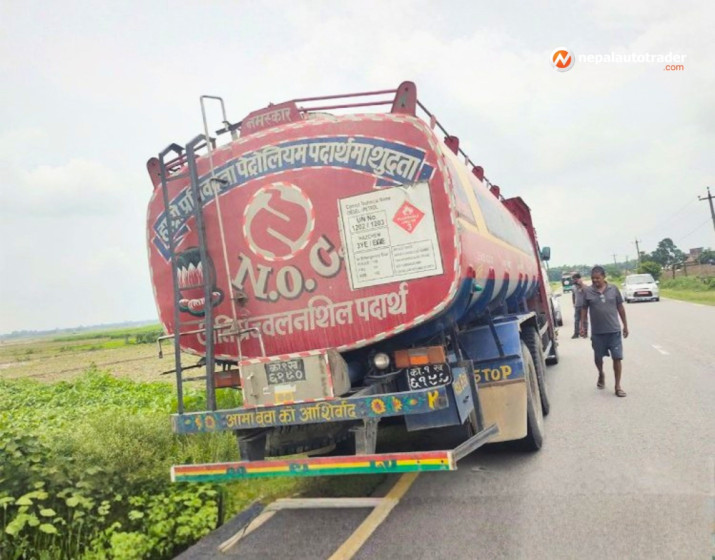
A figure like 973 liters of petrol does not sound catastrophic on its own, until it is placed inside the fragile mechanics of fuel distribution. According to the report published, the missing fuel came from a corporation-operated tanker, setting off concerns that stretch far beyond a single delivery route.
This is not just about volume. It is about trust. Every liter moving through a national fuel chain is assumed to be tracked, measured, and reconciled at multiple checkpoints. When that chain breaks, even once, the implications extend far beyond the company itself.
What makes this development noteworthy is not its scale, but its timing. Fuel supply systems across South Asia are already under pressure from price volatility and logistical strain. A loss like this feels small in isolation, yet unsettling in pattern.
Industry observers often point out that petroleum logistics rely heavily on procedural discipline rather than constant physical oversight. That is where the cracks begin to show.
At the center of the case is a straightforward but uncomfortable question, how does nearly one thousand liters of petrol go missing from a controlled tanker movement?
While full investigative details have not been disclosed publicly in the source, the reported theft indicates a breakdown somewhere between dispatch and delivery. That gap is where fuel accountability systems are supposed to be strongest.
Typical tanker movement involves sealing mechanisms, documentation logs, and verification at both loading and unloading points. When discrepancies arise, they often point to one of three weak points:
Each scenario carries different implications, but all of them point toward a common issue, monitoring fatigue in systems that depend heavily on compliance rather than real-time tracking.
| Incident Factor | Reported Detail | Operational Concern |
|---|---|---|
| Fuel Quantity | 973 liters of petrol | Loss during transit |
| Transport Mode | Nepal Oil Corporation tanker | Chain-of-custody accountability |
| Issue Type | Suspected theft | Security breach in logistics |
The picture that emerges is not one of chaos, but of small vulnerabilities stacking quietly until they become visible.
Fuel logistics is often imagined as a sealed system, industrial, controlled, predictable. In reality, it is a network of human decisions, checkpoints, and assumptions. And assumptions, more often than not, are where losses begin.
The case involving 973 liters of petrol is a reminder of how dependent the system remains on manual verification. Despite advances in digital tracking, many tanker operations still rely on paper logs and periodic inspection rather than continuous telemetry.
Common vulnerability points include:
The consequences are already being felt across the industry. Even isolated incidents can force companies to reassess how they trust their internal reporting systems.
For consumers, the change could be subtle but real. Inefficiencies in fuel distribution often ripple into pricing pressure and supply tightening over time.
Fuel corporations operate on thin margins of precision. A missing volume like 973 liters may not destabilize operations, but it raises uncomfortable questions inside boardrooms and regulatory offices.
Beyond financial loss, the reputational aspect is harder to quantify. Trust in fuel distribution is built slowly and lost quickly. Once the perception of leakage or internal failure takes hold, it becomes difficult to reverse.
Key operational impacts typically include:
The real challenge is not cost, it is execution. Systems can be redesigned, policies rewritten, but behavior on the ground often moves slower than policy frameworks.
This is where companies often find themselves in a cycle of reaction rather than prevention.
Cases like this tend to trigger a predictable sequence. Initial reporting, internal review, and then escalation toward enforcement or regulatory scrutiny. Whether this specific case leads to identification of responsible parties remains tied to investigative outcomes not yet publicly detailed.
What is clear is that fuel theft, even at relatively small volumes like 973 liters, forces institutions to confront uncomfortable blind spots in their logistics architecture.
Possible next steps typically include:
The significance emerges when viewed in a broader context. These are not isolated procedural steps, they are stress tests for an entire distribution ecosystem.
Fuel distribution networks across the region are evolving, but not always at the same pace as the risks they face. Digital tracking, GPS monitoring, and automated reporting systems are increasingly common, yet implementation remains uneven.
The case of the missing 973 liters of petrol sits in that uncomfortable gap between legacy systems and modern expectations. It reflects a transition period where old vulnerabilities still exist alongside new safeguards that are not fully matured.
While the immediate incident may eventually be resolved, the structural questions remain. How much visibility is enough in a system built on trust, and how much redundancy is practical before logistics becomes too costly to operate.
The effect becomes clearer over time. Each incident like this adds pressure for tighter controls, but also exposes how complex full transparency in fuel movement really is.
In that tension lies the future of fuel logistics, still dependent on people, but increasingly pushed toward machines that never assume anything.
Q: How much petrol was reported stolen in this incident?
A: The report states that 973 liters of petrol went missing from a corporation-operated tanker during transit. The exact point of loss is under investigation.
Q: Where did the fuel theft take place?
A: The source report does not specify a precise location beyond the corporate tanker operation. Authorities are expected to review route and depot records.
Q: What makes fuel tanker theft a recurring issue?
A: Fuel logistics often rely on a mix of manual checks and partial digital tracking. This creates gaps where small diversions can go unnoticed unless strict monitoring systems are in place.
Q: How are corporations responding to such incidents?
A: Typically, companies initiate internal audits, verify tanker logs, and reassess security protocols. Investigations also focus on personnel accountability and seal verification systems.
Q: Does a loss of 973 liters significantly impact fuel supply?
A: In isolation, it is not a large supply disruption. However, repeated incidents can erode operational efficiency and raise broader concerns about system integrity.
Q: What long-term changes could prevent similar cases?
A: Wider adoption of real-time GPS tracking, digital seal verification, and automated volume reconciliation could reduce vulnerabilities in tanker-based fuel transport systems.

Nepal Auto-Trader is one-stop platform for all automotive needs. We provide unbiased and unparalleled news/reviews of all auto-motives being launched in Nepalese Auto-Industry. Find recent updates and price of bikes/cars, compare and review recently launched bikes/cars, buy/sell/trade reconditioned cars/bikes and all government news about changing rules and regulation, road safety by subscribing us.

Subscribe to our Newsletter
© Copyright 2026, Nepal Autotrader



.png)
.png)