

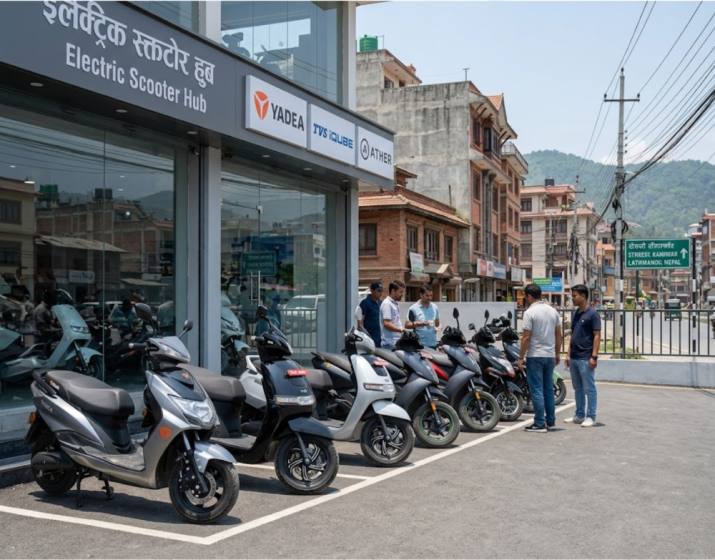
Nepal’s electric two-wheeler market is moving again. After a sluggish phase that saw electric scooters lose momentum against the country’s booming four-wheel EV segment, 2025 has delivered a sharp rebound. Customs data shows imports of electric scooters, mopeds and motorcycles climbed by 32 percent, rising from 5,172 units in 2024 to 6,852 units in 2025. That matters.
The recovery is not being driven by electric motorcycles. Far from it. The market remains heavily dependent on scooters and pedal-assisted mopeds, while electric motorcycle adoption continues to lag behind. Only 18 electric motorcycles entered Nepal in 2025, according to customs figures published by MeroAuto. The volume tells the story better than any press release could.
Importers, distributors and dealerships across Nepal are now leaning harder into practical urban mobility, especially in Kathmandu and the Terai belt where affordable electric commuting is becoming mainstream. Brands with stronger dealership networks and visible after-sales operations are pulling away from smaller players. This changes things.
Yadea emerged as Nepal’s largest electric two-wheeler importer in 2025 with 1,030 units. The Chinese brand, distributed in Nepal by Kuzu Nepal Pvt. Ltd., relied overwhelmingly on scooter volumes to secure the top spot.
Only two electric motorcycles were included in Yadea’s total imports. Everything else was scooter-driven demand. That detail matters because it reflects where Nepal’s EV market is actually growing, compact urban mobility.
The company’s aggressive dealership expansion and visible urban presence helped push volumes higher. Chinese manufacturers continue to benefit from broad product portfolios and pricing flexibility, especially in commuter-focused categories.
Buyers looking at practical EV commuting options have also been comparing products like the Yadea electric scooter range and emerging affordable city EVs. The competition is intensifying fast.
| Brand | Importer/Distributor | 2025 Imports |
|---|---|---|
| Yadea | Kuzu Nepal Pvt. Ltd. | 1,030 units |
| TVS iQube | Jagadamba Motors | 881 units |
| Ather | Vaidya Energy | 837 units |
| Green Power | Electric moped importer | Approx. 700 units |
| Bajaj Chetak | Hansraj Hulashchand & Company | 440 units |
TVS delivered one of the year’s biggest jumps. Jagadamba Motors, the authorized importer and distributor for TVS in Nepal, imported 881 units of the TVS iQube in 2025. That figure stood at just 441 units in 2024.
In simple terms, imports doubled within a year.
The iQube’s rise reflects changing buyer priorities. Consumers are placing more emphasis on established dealership support, charging practicality and ownership confidence rather than chasing headline specifications alone.
Meanwhile, Ather slipped to third position despite importing a healthy 837 units. Distributed by Vaidya Energy, Ather continues to sell the 450 series and the newer Rizta in Nepal.
Its volume stayed close to last year’s numbers, but slightly lower imports pushed the brand down one rank in the overall standings. That is the brutal reality of a fast-expanding market. Staying still can feel like moving backwards.
Readers following Nepal’s broader EV expansion may also want to explore the latest Nepal EV import trends and ongoing shifts in the country’s charging ecosystem.
One of the most interesting developments came from the moped segment. Green Power secured fourth position largely because of demand for pedal-assisted electric mopeds.
Around 700 units were imported in 2025, with particularly strong sales reported across the Terai region. These vehicles are cheaper to operate, simple to maintain and suited to shorter daily commuting distances.
They are not glamorous machines. But they are solving a transportation problem for a growing number of riders.
That practical appeal is beginning to reshape the market beneath the headline brands. Quietly, steadily.
| Market Metric | 2025 | 2024 |
|---|---|---|
| Total electric two-wheeler imports | 6,852 units | 5,172 units |
| Growth rate | 32 percent | - |
| Electric motorcycle imports | 18 units | Not specified |
| Brands importing over 100 units | About 12 brands | Not specified |
Bajaj Chetak secured fifth position with 440 imported units. The electric scooter is brought into Nepal by Hansraj Hulashchand & Company, Bajaj’s official distributor in the country.
The Chetak’s steady rise highlights how legacy motorcycle brands are trying to retain relevance as Nepal’s commuter market electrifies.
Several smaller brands also posted respectable numbers:
These numbers show just how fragmented Nepal’s electric scooter space has become. More than three dozen brands are now active in the market, although only a limited group is importing vehicles at meaningful scale.
Many smaller brands still face challenges around spare parts availability, long-term service support and dealer consistency. Buyers are becoming more cautious. And rightly so.
For additional context, the market is also seeing rising interest in articles comparing products like the TVS iQube vs Ather Rizta and broader EV ownership costs.
The biggest weakness in Nepal’s two-wheeler EV story remains electric motorcycles. Imports remain negligible despite the broader market rebound.
Only 18 electric motorcycles entered the country during 2025. That figure underlines the gap between scooter practicality and motorcycle adoption in Nepal.
Several factors continue to limit demand:
Scooters, meanwhile, fit directly into Nepal’s urban commuting patterns. They are easier to charge, easier to ride and easier to justify financially. The market is responding accordingly.
For now, Nepal’s electric two-wheeler growth story remains overwhelmingly scooter-led. The numbers leave very little room for debate.
Q: How many electric two-wheelers were imported into Nepal in 2025?
A: Nepal imported 6,852 electric two-wheelers in 2025. This represented a 32 percent increase compared to the 5,172 units imported in 2024.
Q: Which brand imported the most electric scooters in Nepal?
A: Yadea became the top importer with 1,030 units. The brand is distributed in Nepal by Kuzu Nepal Pvt. Ltd..
Q: Which company imports the TVS iQube in Nepal?
A: The TVS iQube is imported and distributed by Jagadamba Motors. The company imported 881 units in 2025, double the previous year’s volume.
Q: Why are electric scooters selling faster than electric motorcycles?
A: Electric scooters are viewed as more practical for daily commuting. Lower operating costs, easier charging and stronger dealership support are helping scooters outperform electric motorcycles.
Q: Which regions are seeing strong demand for electric mopeds?
A: The Terai region has shown strong demand for pedal-assisted electric mopeds, especially models imported by Green Power.
Q: Which other electric scooter brands are active in Nepal?
A: Brands including Garow, Gogoro, TAILG, Luyuan, Kaisai and JEEHO all recorded imports above 100 units in 2025.

Nepal Auto-Trader is one-stop platform for all automotive needs. We provide unbiased and unparalleled news/reviews of all auto-motives being launched in Nepalese Auto-Industry. Find recent updates and price of bikes/cars, compare and review recently launched bikes/cars, buy/sell/trade reconditioned cars/bikes and all government news about changing rules and regulation, road safety by subscribing us.

Subscribe to our Newsletter
© Copyright 2026, Nepal Autotrader



.png)
.png)