

For years, Nepal’s driving license system has been defined by one word, delay. Applicants waited months, sometimes years, for a simple plastic card. It became routine. It became expected.
Now, that narrative is starting to crack.
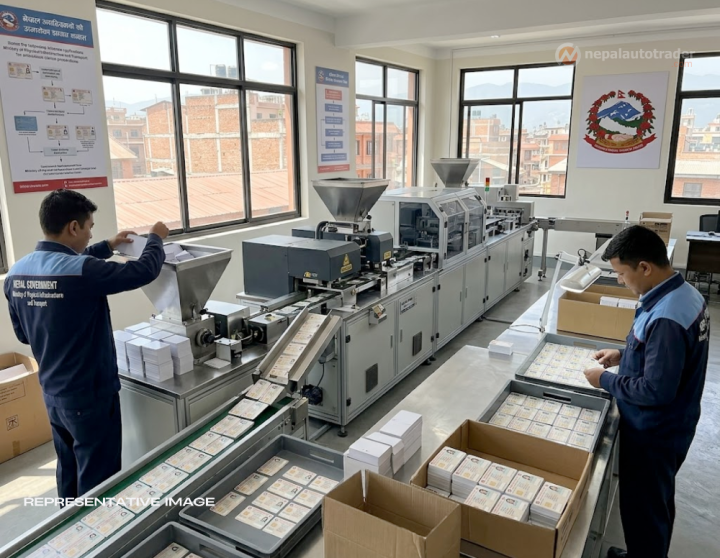
The Department of Transport Management has ramped up its operational capacity to 40,000 licenses per day. That number matters. It is not incremental, it is transformational.
Earlier, printing limitations created a bottleneck that slowed the entire ecosystem. Testing passed, paperwork completed, yet the final step stalled. The card never arrived on time.
That is changing now. Rapidly.
This is not just about machines running faster. It is about a system finally catching up with demand. That matters.
Scale is everything in infrastructure. And this is scale.
| Metric | Previous State | Current Capacity |
|---|---|---|
| Daily License Printing | Limited, backlog-driven | 40,000 units per day |
| Backlog Status | Severe accumulation | Active reduction underway |
| Processing Speed | Slow, inconsistent | High-volume, streamlined |
At 40,000 licenses daily, the system shifts from reactive to proactive. Instead of chasing old applications, it can start matching incoming demand in real time.
This is where the real impact lies. Backlogs are not just numbers, they represent frustrated users, delayed mobility, and lost productivity.
Clearing them changes behavior. People begin to trust the system again.
This changes things.
This jump did not happen overnight. It is the result of layered improvements across the workflow.
Each of these elements plays a role. Alone, they help. Together, they transform.
The key here is consistency. Sustaining 40,000 units per day is more important than hitting it once.
If maintained, this becomes a structural upgrade, not a temporary fix.
Nepal’s license backlog did not appear suddenly. It built slowly, then all at once.
Demand surged. Systems did not scale. The gap widened.
Applicants who completed trials were forced into long waiting cycles. In some cases, temporary receipts became de facto licenses.
This created multiple ripple effects:
Now, with high-volume daily printing, the system has a chance to reset.
But clearing backlog is only half the story. Preventing its return is the real test.
That is where long-term discipline comes in.
For everyday users, the implications are immediate.
Shorter wait times. Predictable delivery. Fewer follow-ups.
That alone improves the ownership experience of a driving license, something often overlooked but deeply important.
| Impact Area | Before Capacity Increase | After Capacity Increase |
|---|---|---|
| Waiting Time | Extended, uncertain | Reduced, more predictable |
| User Experience | Frustration-driven | Efficiency-driven |
| System Trust | Low confidence | Improving credibility |
Trust in public systems is built slowly. Lost quickly.
This move begins to rebuild that trust.
It signals intent. It shows capability. And most importantly, it delivers results.
That matters.
Scaling up is one thing. Sustaining it is another.
The Department of Transport Management now faces a different challenge, maintaining this output without breakdowns or regression.
Key focus areas going forward will likely include:
If these are managed well, Nepal could move from backlog recovery to real-time service delivery.
That is a different league altogether.
The system is no longer catching up. It is starting to keep pace.
And once that happens, expectations rise. They always do.
Q: How many driving licenses are now printed daily in Nepal?
A: The Department of Transport Management has increased its capacity to 40,000 licenses per day, significantly improving output and reducing backlog pressure.
Q: Will this eliminate the existing backlog completely?
A: The increased capacity is actively reducing the backlog. Full clearance will depend on sustained daily output and incoming application volume.
Q: Why were driving licenses delayed before?
A: Delays were primarily due to limited printing capacity, process inefficiencies, and a surge in applications that outpaced system capability.
Q: How will this affect new applicants?
A: New applicants are expected to receive their licenses faster, with improved predictability in delivery timelines.
Q: Is the 40,000 daily output sustainable?
A: Sustainability will depend on operational consistency, system maintenance, and effective management of printing resources.
Q: What does this mean for Nepal’s transport system?
A: It signals a major improvement in administrative capacity, potentially restoring public trust and enabling more efficient service delivery going forward.
NEXT NEWS

Nepal Auto-Trader is one-stop platform for all automotive needs. We provide unbiased and unparalleled news/reviews of all auto-motives being launched in Nepalese Auto-Industry. Find recent updates and price of bikes/cars, compare and review recently launched bikes/cars, buy/sell/trade reconditioned cars/bikes and all government news about changing rules and regulation, road safety by subscribing us.

Subscribe to our Newsletter
© Copyright 2026, Nepal Autotrader



.png)
.png)