

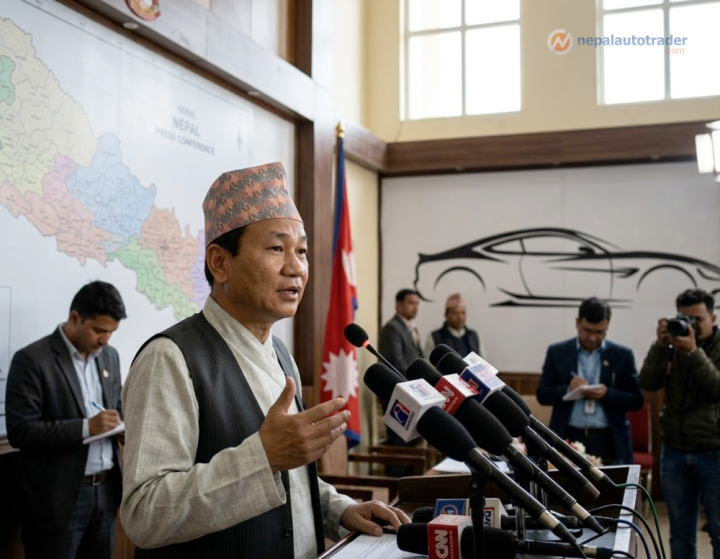
On Wednesday, Harka Sampang posted on Facebook, declaring that if he were in power, Nepal would adopt a policy to build vehicles inside the country. He wrote, “Even if we cut the 300% tax on new cars, people will still buy imported models! We need a real domestic‑production drive, not empty tax promises.” The tone was urgent, the message clear: a home‑grown auto sector is the only sustainable answer.
His statement hit the feed at 4:41 pm,Wednesday, Falgun 27,2082 , and instantly ignited a flurry of comments. Supporters cheered the nationalist sentiment. Critics reminded him that Nepal lacks a vehicle‑manufacturing ecosystem, from stamping presses to supply‑chain logistics. That matters because policy without capacity is just rhetoric.
A few days earlier, a post attributed to prospective finance minister Dr. Swarnim Wagle claimed a 300% tax reduction on new vehicle purchases was being considered. The claim spread like wildfire, but the secretariat later clarified that Dr. Wagle never made such a statement. The mis‑information fed into Sampang’s narrative, giving it a veneer of urgency.
The reality is stark: Nepal currently imposes a customs duty of 25% on completely built units, plus a value‑added tax of 13% and an excise duty that can reach 100% for luxury models. A 300% cut would not only be fiscally impossible, it would also destabilise revenue streams that fund road infrastructure. That changes things for any realistic reform agenda.
Proponents argue that building cars locally would:
But the hurdles are equally real:
That matters because a policy must address both supply‑side capacity and demand‑side affordability. Without a clear roadmap, slogans risk becoming empty noise.
Local dealers, importers, and multinational manufacturers responded cautiously. A spokesperson for Hyundai Nepal noted that “tax incentives are useful, but they cannot replace the need for a stable, long‑term investment climate.” Meanwhile, MG Motors Nepal highlighted that their recent 2000‑car export to the Gulf region was possible only because of established global supply chains.
The consensus: a government‑led automotive cluster, perhaps modeled after Thailand’s Eastern Economic Corridor, could be a starting point. That would involve land allocation, tax holidays for component manufacturers, and a clear regulatory framework for safety and emissions. This changes things for investors who need certainty before committing billions.
Sampang’s call has forced the conversation into the public sphere. The next steps could include:
If the government follows through with data‑driven planning, the nation could move from a tax‑talk echo chamber to a genuine industrial transformation. That matters because the auto sector touches everything from employment to emissions.
| Event | Date / Time | Key Outcome |
|---|---|---|
| Tax‑cut rumor posted | Wednesday, Falgun 27, 2082, 3:15 pm | Public confusion, later debunked by secretariat |
| Sampang Facebook statement | Wednesday, Falgun 27, 2082, 4:41 pm | Calls for domestic car production, sparks debate |
| Industry response | Thursday, Falgun 27, 2082 | Dealers stress need for infrastructure, not just tax cuts |
Q: Did Dr. Swarnim Wagle actually propose a 300% tax cut on new cars? A: No. The secretariat confirmed that no such statement was made, and the claim was a mis‑interpretation of unrelated fiscal discussions.
Q: What is the current import duty on completely built units in Nepal? A: Nepal levies a 25% customs duty, plus a 13% VAT and an excise duty that can reach up to 100% for luxury vehicles.
Q: How many cars does Nepal sell annually? A: Approximately 15,000 passenger‑car units are sold each year, according to the latest industry data.
Q: Is there any existing automotive assembly plant in Nepal? A: No full‑scale assembly line exists; the country relies entirely on imports and a few CKD (completely knocked down) operations that still require imported components.
Q: What would be the first realistic step toward local production? A: Establishing a government‑backed automotive park with tax incentives for component makers, coupled with a feasibility study, is widely regarded as the logical starting point.
Q: How can consumers differentiate between genuine policy news and viral rumors? A: Verify statements through official ministry releases, check the source’s credibility, and look for corroborating reports from established media outlets.

Nepal Auto-Trader is one-stop platform for all automotive needs. We provide unbiased and unparalleled news/reviews of all auto-motives being launched in Nepalese Auto-Industry. Find recent updates and price of bikes/cars, compare and review recently launched bikes/cars, buy/sell/trade reconditioned cars/bikes and all government news about changing rules and regulation, road safety by subscribing us.

Subscribe to our Newsletter
© Copyright 2026, Nepal Autotrader



.png)
.png)