

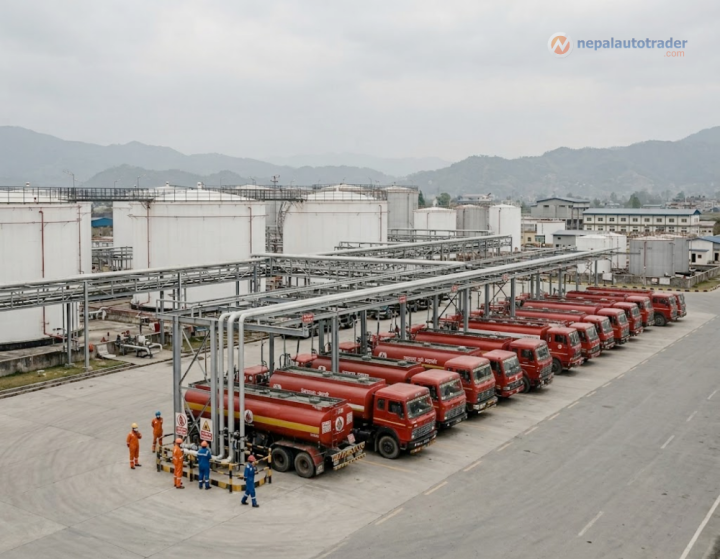
The headline is simple, almost too simple. A 50 percent discount on petroleum imports taxes. But the implications for Nepal run deeper than a temporary cost correction.
At the center of this development sits Nepal Oil Corporation, an institution that has long struggled with fluctuating global oil prices and domestic pricing pressures. A discount of this scale is not routine. It is structural, at least in the short term. That matters.
The immediate effect is obvious. Lower import costs. Reduced financial strain. A potential buffer against losses that have historically defined the corporation’s balance sheet.
But energy markets do not operate in isolation. Every adjustment triggers a chain reaction. This is one of those moments.
The reported discount applies to petroleum imports, a lifeline for a country heavily dependent on external energy supplies. Nepal does not produce crude oil. It imports, refines, distributes. Every litre carries geopolitical weight.
While the exact mechanics behind the discount are not fully detailed, the outcome is clear. Import costs have been slashed significantly. That changes pricing dynamics almost overnight.
| Metric | Previous Scenario | Current Scenario |
|---|---|---|
| Import Cost | High, volatile | Reduced with discount |
| Financial Pressure | Persistent losses | Temporary relief |
| Pricing Flexibility | Limited | Improved |
This shift does not just affect accounting books. It affects policy decisions, pricing strategies, and consumer sentiment.
Timing matters here. Global energy volatility has been relentless. Any relief, especially at this scale, arrives as both opportunity and test.
Fuel prices shape behavior. They influence what people drive, how often they travel, and what they consider buying next.
For Nepal’s automotive landscape, this development lands at a sensitive moment. The country has been pushing toward electrification, with growing interest in EVs and reduced dependence on fossil fuels. A sudden drop in petroleum costs could slow that momentum. This changes things.
That said, this is not a permanent reset. Consumers are increasingly aware of long-term cost ownership, not just pump prices.
Nepal’s reliance on imported petroleum is not new. It is structural. This discount does not change that reality, but it does expose how sensitive the system is to external variables.
Energy security is not just about price. It is about stability, diversification, and control.
| Factor | Impact of Discount | Long-Term Outlook |
|---|---|---|
| Import Dependency | Unchanged | Still high |
| Cost Stability | Improved short-term | Uncertain |
| Energy Diversification | Potentially delayed | Still critical |
This is where the real tension lies. A discount provides relief, but it can also reduce urgency. That matters.
Short-term gains versus long-term direction. That is the policy tightrope.
Authorities now face critical decisions:
Each path sends a different signal. Each has consequences.
Lowering fuel prices may win public approval instantly. But it risks slowing the transition toward cleaner energy. Holding prices steady could strengthen financial resilience, but it comes with political cost.
This is not just economics. It is strategy.
The discount is real. The impact is immediate. But the story is far from over.
The coming months will reveal how Nepal Oil Corporation and policymakers respond. Will this be treated as a temporary cushion, or a structural shift?
For the automotive sector, the ripple effects will be closely watched. From fuel pricing to EV adoption, every decision now carries amplified weight.
One thing is certain. Moments like this do not just pass. They reshape trajectories.
And right now, Nepal’s energy narrative is at a pivot point.

Nepal Auto-Trader is one-stop platform for all automotive needs. We provide unbiased and unparalleled news/reviews of all auto-motives being launched in Nepalese Auto-Industry. Find recent updates and price of bikes/cars, compare and review recently launched bikes/cars, buy/sell/trade reconditioned cars/bikes and all government news about changing rules and regulation, road safety by subscribing us.

Subscribe to our Newsletter
© Copyright 2026, Nepal Autotrader



.png)
.png)