

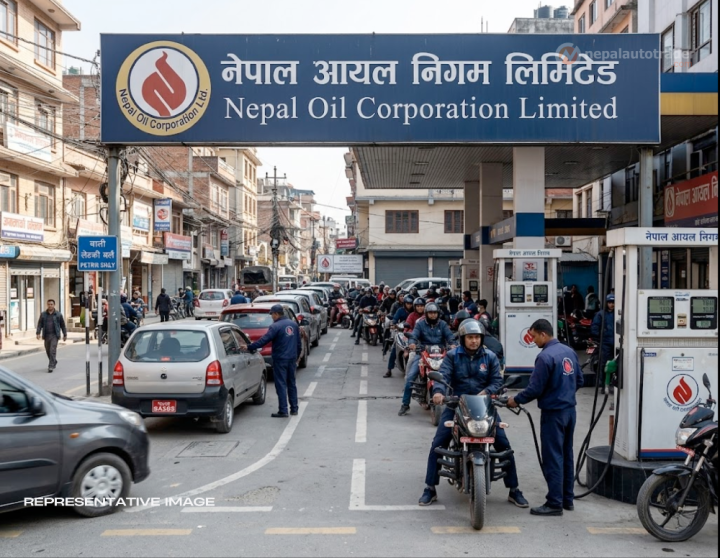
The fuel situation in Nepal is tense. Nepal Oil Corporation (NOC) continues to bleed as petrol and diesel sales run deep into losses. In the last month and 8 days alone, the corporation reported a staggering 11 billion NPR loss. That matters, because it shows how pricing policies clash with operational realities.
Purchasing, taxes, transportation, and sales costs outpace revenue, leaving the NOC in the red. Diesel, a staple for transport and industry, is particularly concerning. The IOC increased diesel prices by 150 NPR per liter over the past month, rising from 91.88 NPR on February 16 to 242 NPR on April 1. Add in 49.28 NPR government taxes and 2.39 NPR operating costs, and the real cost reaches 285 NPR per liter. Yet, NOC sells diesel in the Kathmandu Valley at just 182 NPR, leaving a loss of 120 NPR per liter.
Diesel isn't the only headache. Petrol sales show a loss of 34 NPR per liter, while cylinder gas sales hit a staggering 416 NPR per unit loss. Consumers see stable prices at pumps, but behind the scenes, the NOC's finances are under severe pressure.
| Fuel Type | Real Cost | Sale Price | Loss per Unit |
|---|---|---|---|
| Diesel | 285 NPR | 182 NPR | 120 NPR |
| Petrol | Calculated | Sale Price | 34 NPR |
| Gas Cylinder | Calculated | Sale Price | 416 NPR |
This isn't just numbers. It's the backbone of Nepal's transport and industry. A loss of this magnitude affects procurement, infrastructure projects, and price stability. If NOC can't sustain these losses, supply chains risk disruption. That could ripple across the economy in ways that aren't immediately visible.
The tension between covering operational costs and keeping consumer prices affordable is palpable. It's a delicate dance, with every liter sold deepening losses or stoking inflation.
If the current trajectory continues, Nepal Oil Corporation might need external financing or subsidy adjustments. Losses this deep affect long-term planning for fuel imports and distribution networks. Market watchers should note, fuel affordability is politically sensitive and socially impactful. The next government or corporate action will define how sustainable fuel pricing is in Nepal for the months ahead.
For everyday users, the price at the pump seems stable. But under the surface, the government and NOC are absorbing the cost. That matters. It influences future fuel policies, taxation, and potential price spikes. Consumers may not feel it now, but the numbers show a pressure cooker situation brewing in Nepal's energy sector.
Q: What is the loss per liter of petrol?
A: NOC incurs a loss of 34 NPR per liter of petrol, reflecting the gap between real costs and sale price.
Q: How much does NOC lose on gas cylinders?
A: Each gas cylinder sale results in a 416 NPR loss, highlighting severe financial strain on the corporation.
Q: Why is diesel pricing so low compared to costs?
A:
NOC maintains subsidized prices to keep fuel affordable, despite the
real cost being 285 NPR per liter, creating significant losses.
Q: When did IOC increase diesel prices recently?
A:
The Indian Oil Corporation raised diesel prices over a month period,
from 91.88 NPR on February 16 to 242 NPR on April 1, affecting NOC's
costs.
Q: What could happen if losses continue?
A:
Sustained losses could force NOC to seek subsidies, restructure
pricing, or impact fuel supply chains, affecting both industry and
consumers.
PREVIOUS NEWS
NEXT NEWS

Nepal Auto-Trader is one-stop platform for all automotive needs. We provide unbiased and unparalleled news/reviews of all auto-motives being launched in Nepalese Auto-Industry. Find recent updates and price of bikes/cars, compare and review recently launched bikes/cars, buy/sell/trade reconditioned cars/bikes and all government news about changing rules and regulation, road safety by subscribing us.

Subscribe to our Newsletter
© Copyright 2026, Nepal Autotrader



.png)
.png)