

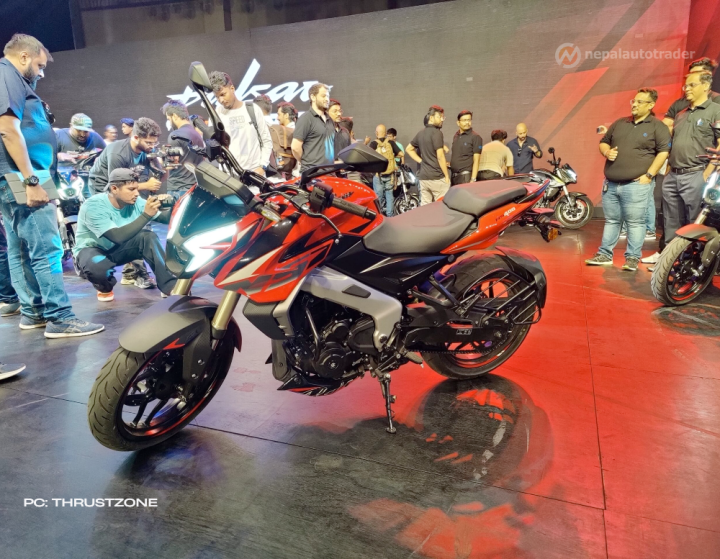
Bajaj Pulsar NS400 Z specs leaked ahead of official launch
Powered by a 373cc liquid-cooled engine derived from the KTM 390 Duke platform
Expected output around 40 PS and 35 Nm, making it the most powerful Pulsar yet
Likely to feature ride-by-wire, traction control, ride modes, USD forks
Positioned against TVS Apache RTR 310, BMW G 310 R, and KTM 390 Duke
Focused on delivering affordable performance motorcycle value
Expected launch window between 2024 and 2025
The upcoming Bajaj Pulsar NS400 Z is shaping up to be a defining moment for Bajaj Auto. The Pulsar badge has always stood for accessible performance, but this time the brand is aiming higher.
With leaked specifications pointing toward serious hardware and modern electronics, the NS400 Z is not just another upgrade. It is a direct attempt to crack the premium streetfighter segment while staying within reach of budget-conscious riders.
The sub 400cc category is no longer entry level. It is now packed with technology, performance, and brand rivalry.
Key competitors include
KTM 390 Duke
TVS Apache RTR 310
BMW G 310 R
| Model | Engine | Power | Positioning |
|---|---|---|---|
| Pulsar NS400 Z | 373cc | ~40 PS | Value performance |
| KTM 390 Duke | 399cc | ~45 PS | Performance benchmark |
| Apache RTR 310 | 312cc | ~35 PS | Tech focused |
| BMW G 310 R | 313cc | ~34 PS | Premium entry |
The strategy from Bajaj is clear. Undercut rivals on price while delivering near comparable performance.
At the heart of the NS400 Z sits a familiar but proven engine platform.
| Specification | Details |
|---|---|
| Engine type | Single cylinder liquid cooled |
| Displacement | 373cc |
| Power | ~40 PS |
| Torque | ~35 Nm |
| Gearbox | 6 speed |
| Assist | Slipper clutch |
This engine, shared with earlier generations of the KTM 390 Duke, brings a strong mix of performance and reliability. It also ensures that the NS400 Z will not feel underpowered in its class.
Bajaj appears ready to push the Pulsar into a more premium space with a solid tech package.
Ride by wire throttle
Multiple ride modes
Traction control
Dual channel ABS
Fully digital display
LED lighting setup
| Component | Setup |
|---|---|
| Front suspension | USD forks |
| Rear suspension | Monoshock |
| Braking | Disc brakes with ABS |
| Frame | Perimeter type |
This level of equipment is no longer optional in this segment. Bajaj knows it and is responding accordingly.
This is where the Bajaj Pulsar NS400 Z becomes interesting.
It is not trying to beat rivals outright on power or brand prestige. Instead, it focuses on delivering the most performance per dollar.
Lower expected pricing than European rivals
Proven engine platform
Modern electronics at a competitive cost
Strong brand recall in emerging markets
For many buyers, especially first time performance motorcycle owners, this combination is more practical than chasing outright specs.
On paper, the NS400 Z sits slightly below the KTM 390 Duke in power. But that is not the full story.
Expected affordability
Easier ownership experience
Wider service network
Peak performance output
Advanced electronics refinement
Premium branding
This balance makes the NS400 Z less intimidating and more accessible, which is exactly where Bajaj wants it.
The Bajaj Pulsar NS400 Z is not chasing extremes. It is targeting relevance.
If Bajaj gets the pricing right, this motorcycle could
Redefine the affordable performance motorcycle category
Attract a wider audience upgrading from 150cc to 250cc bikes
Compete strongly in markets where value matters more than branding
The leaked specs suggest a motorcycle that understands its audience. Not flashy, not overbuilt, but sharp where it counts.
The final verdict will depend on pricing and real world performance. But one thing is clear. Bajaj is not playing safe with the NS400 Z.

Nepal Auto-Trader is one-stop platform for all automotive needs. We provide unbiased and unparalleled news/reviews of all auto-motives being launched in Nepalese Auto-Industry. Find recent updates and price of bikes/cars, compare and review recently launched bikes/cars, buy/sell/trade reconditioned cars/bikes and all government news about changing rules and regulation, road safety by subscribing us.

Subscribe to our Newsletter
© Copyright 2026, Nepal Autotrader



.png)
.png)