

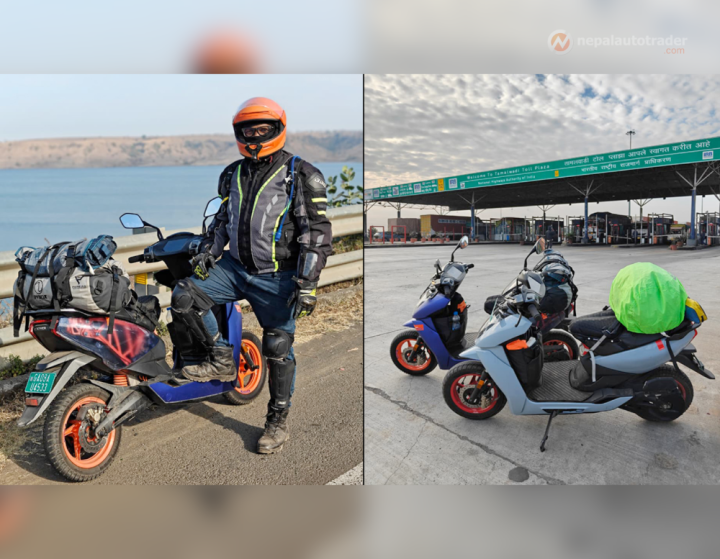
Two riders left Goa on 9 January 2026 with a single Ather 450 between them and a map that stretched over 6,000 kilometers. The goal was simple: prove that an Indian‑made electric scooter could survive highways, mountain passes, border formalities and the occasional power‑outage. The journey was logged for the Asia Book of Records, aiming to claim the longest individual ride on an electric two‑wheeler. That matters because it turns a niche endurance story into a data point that manufacturers can cite.
Ather’s powertrain is fully designed, engineered and manufactured in India. The 450 series offers two battery options – a 2.9 kWh pack for the 450S and 450X, and a 3.7 kWh pack for the higher‑spec 450X. The riders needed a scooter with a respectable range, fast‑charging capability and a service network that could be tapped in Nepal. Ather’s Experience Centres provided exactly that – reliable DC fast chargers, technical support and a community of early adopters. The decision underscores how a solid after‑sales ecosystem can outweigh raw performance numbers.
The expedition traced a corridor that many commercial trucks use, but few two‑wheelers have attempted. From Goa, the riders headed north through Gorakhpur, crossed the India‑Nepal border at Sonauli, then entered Butwal. From there they rode east to Chitwan, skirting the edge of the national park, before climbing into the capital, Kathmandu. Along the way, they stopped at Ather Experience Centres for quick top‑ups – each charge took roughly 45 minutes for an 80 percent boost. Border checks added a few hours, but the team kept a tight schedule, proving that logistics can be managed with careful planning. This changes things for future EV tours that might fear bureaucratic delays.
First, range anxiety is more a perception problem than a technical one. The 450X with the 3.7 kWh battery comfortably covered 120 km on a single charge in mixed traffic, matching the claimed figures. Second, a robust charging network, even if limited to a handful of hubs, can sustain long‑distance travel. Third, the scooter’s pricing in Nepal – starting at Rs 3,24,999 – positions it competitively against petrol‑powered 150 cc bikes that cost a similar amount but incur fuel costs. Finally, the community vibe at each stop – riders swapping stories, locals trying the scooter – shows that electric mobility can spark cultural exchange, not just tech adoption.
The success of this trek arrives at a time when Nepal is expanding its EV charging infrastructure, aiming for 500 public chargers by 2028. Ather’s visible presence at three major towns gives the brand a foothold that other manufacturers will try to match. With pricing now transparent, import duties stable, and a growing awareness of zero‑emission transport, the market is ripe for a surge in electric two‑wheel sales. The record‑breaking ride may inspire other adventure riders, fleet operators and even logistics firms to consider electric scooter fleets for regional routes. That matters because it could accelerate the shift from diesel‑fuelled motorcycles that dominate Nepal’s streets today.
Q: What is the price of the Ather 450X with the larger battery in Nepal? A: The 450X equipped with the 3.7 kWh pack is priced at Rs 3,99,999 in the Nepalese market.
Q: When will the Ather 450 be available at new dealerships outside Kathmandu? A: Ather plans to roll out additional Experience Centres in Pokhara and Biratnagar by Q3 2026, expanding availability across the country.
Q: How does the range of the 450S compare to its rivals like the TVS iQube? A: The 450S with a 2.9 kWh battery delivers roughly 120 km per charge under mixed conditions, which is comparable to the TVS iQube’s claimed 100‑km range, but Ather offers faster DC charging.
Q: Are there any special incentives for electric scooters in Nepal? A: The Nepalese government currently offers a 10 percent import duty reduction for electric two‑wheelers and plans to introduce a green‑vehicle tax rebate by 2027.
Q: What charging infrastructure did the riders use during the expedition? A: They relied on Ather’s DC fast‑charging stations at the Experience Centres in Butwal, Chitwan and Kathmandu, each delivering an 80 percent charge in about 45 minutes.

Nepal Auto-Trader is one-stop platform for all automotive needs. We provide unbiased and unparalleled news/reviews of all auto-motives being launched in Nepalese Auto-Industry. Find recent updates and price of bikes/cars, compare and review recently launched bikes/cars, buy/sell/trade reconditioned cars/bikes and all government news about changing rules and regulation, road safety by subscribing us.

Subscribe to our Newsletter
© Copyright 2026, Nepal Autotrader



.png)
.png)